

SD Shank Guide: Models, Specifications & Hammer Compatibility
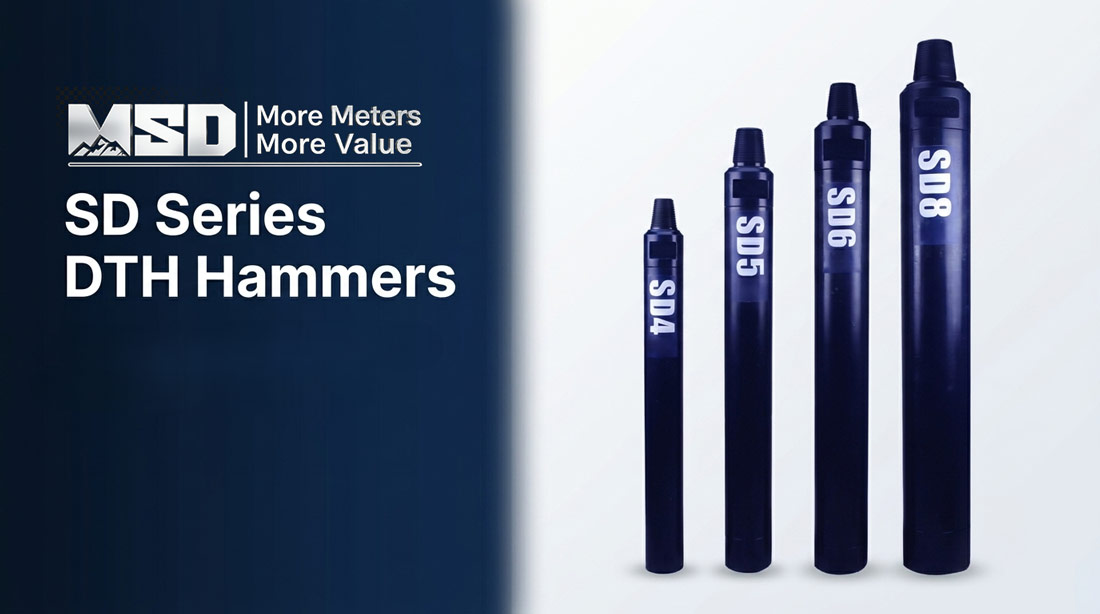
What Is an SD Shank in DTH Drilling?
The SD shank is a splined coupling used to connect a DTH (Down-The-Hole) bit to its matching DTH hammer. DTH drilling is a percussion method where the hammer works at the bottom of the hole, directly behind the bit, transferring impact energy through direct piston contact rather than through the drill string. Like other DTH shank standards, SD uses a splined profile plus a retaining ring — never an API thread — to keep the bit captive in the hammer's chuck while still allowing it to float freely for the piston strike.
Shank compatibility is really a hammer-side question: it's the hammer's chuck geometry that determines which shank standard fits, not the bit alone. Confirming the correct DTH hammer model and its accepted shank standard before ordering replacement bits avoids the most common sourcing mistake we see — buying by nominal diameter without checking which shank the hammer chuck actually accepts.
SD shank sizes run from SD4 up to SD12, with each number corresponding to a hammer size class and a matching recommended bit diameter range. This guide covers confirmed specifications for the full SD4–SD12 range, plus a compatibility question worth knowing before you order: SD10 doesn't only appear as an SD-brand hammer.
SD Shank Models — Bit Diameter, Air Pressure & Rotation Data
The table below lists confirmed SD shank specifications, drawn from MSD's own hammer/bit compatibility data.
| Model | Recommended Bit Diameter | Air Pressure Range | Air Consumption | Impact Rate | Rotation | Compatible Drill Pipe Thread |
|---|---|---|---|---|---|---|
| SD4 | 110–135 mm | 1.2–2.0 bar | 1.0 bar: 6 · 1.8 bar: 9 · 2.4 bar: 14 m³/min | 30 Hz | 25–40 r/min | API 2 3/8" Reg |
| SD5 | 155–190 mm | 1.3–2.3 bar | 1.0 bar: 7 · 1.8 bar: 14 · 2.4 bar: 19 m³/min | 28 Hz | 20–35 r/min | API 2 3/8" / 3 1/2" / 7/8" |
| SD6 | 155–203 mm | 1.5–2.5 bar | 1.0 bar: 9 · 1.8 bar: 18 · 2.4 bar: 26 m³/min | 25 Hz | 20–30 r/min | API 3 1/2" Reg |
| SD8 | 195–254 mm | 1.5–3.0 bar | 1.0 bar: 12 · 1.8 bar: 22 · 2.4 bar: 28 m³/min | 22 Hz | 15–25 r/min | API 4 1/2" Reg |
| SD10 | 254–311 mm | 2.0–3.5 bar | 1.0 bar: 18 · 1.8 bar: 40 · 2.4 bar: 65 m³/min | 20 Hz | 20–35 r/min | API 6 5/8" Reg |
| SD12 | 305–445 mm | 2.0–3.5 bar | 1.0 bar: 28 · 1.8 bar: 50 · 2.4 bar: 71 m³/min | 20 Hz | 15–25 r/min | API 6 5/8" Reg |
Note: SD5 and SD6 have overlapping bit diameter coverage (155–190mm and 155–203mm respectively) at different air pressure ratings — confirm the exact model stamped on your hammer rather than selecting by bit diameter alone.
SD4 and SD5 — Smaller-Diameter Range
SD4 covers 110–135mm at a relatively low 1.2–2.0 bar, running a fast 30 Hz impact rate with 25–40 r/min rotation — the highest rotation range in the SD lineup, suited to lighter-duty work where flushing and cuttings clearance matter more than raw impact force. SD5 steps up to 155–190mm at 1.3–2.3 bar and can pair with 2 3/8", 3 1/2", or 7/8" drill pipe thread, giving it more flexibility across different rig setups than SD4's single 2 3/8" option.
SD6 and SD8 — Mid-Range Production Sizes
SD6 (155–203mm) and SD8 (195–254mm) step up in air pressure to 1.5–2.5 bar and 1.5–3.0 bar respectively, with impact rate dropping to 25 Hz and 22 Hz as bit diameter increases. Both move to heavier drill pipe thread — 3 1/2" Reg for SD6, 4 1/2" Reg for SD8 — reflecting the higher torque these sizes need to run at full spec.
SD10 and SD12 — Large-Diameter Range
SD10 (254–311mm) and SD12 (305–445mm) both step up to 2.0–3.5 bar and share the heaviest pipe thread in the lineup, API 6 5/8" Reg. Air consumption nearly doubles from SD10 to SD12 at matching pressure (40 vs 50 m³/min at 1.8 bar), and rotation speed drops to 15–25 r/min for SD12 — the lowest in the range, consistent with larger shanks trading rotation speed for higher per-blow impact energy. These two sizes are where SD moves from general quarrying into genuinely large-bore mining and foundation work.
The SD10 Cross-Brand Question — One Model Name, Two Hammer Types
Here's something worth knowing before ordering a replacement SD10 bit: SD10 isn't exclusive to SD-brand hammers. Current compatibility data shows an SD10 shank bit also listed under a COP-brand hammer, with the same 254–311mm bit diameter range but different air specifications.
| Hammer Type | Bit Shank | Bit Diameter | Air Pressure | Air Consumption | Impact Rate | Rotation |
|---|---|---|---|---|---|---|
| SD | SD10 | 254–311 mm | 2.0–3.5 bar | 1.0 bar: 18 · 1.8 bar: 40 · 2.4 bar: 65 m³/min | 20 Hz | 20–35 r/min |
| COP | SD10 | 254–311 mm | 1.8–3.2 bar | 23.7–32.6 m³/min | Not specified | Not specified |
The bit diameter range matches across both, but the air pressure band and consumption figures don't line up exactly — and the COP-hammer version has no confirmed impact rate or rotation data. This matters in practice: if you're sourcing a replacement SD10 bit for a hammer you didn't originally purchase, confirm which hammer type it actually is before assuming the SD-brand air specifications apply. Ordering against the wrong air data means either underpowering the bit (reduced flushing, slower penetration) or running outside the hammer's rated range.
This kind of naming overlap isn't unique to SD10 — shank names can carry across hammer brands in ways that aren't obvious from the model number alone. For a broader look at how shank standards relate across brands (DHD, QL, MISSION, COP), see our DHD Shank guide.
Selecting the Right SD Shank Bit for Large-Diameter Work
SD's range extends further into large-bore territory than most other shank standards in MSD's lineup — SD12 covers up to 445mm, putting it squarely in large open-pit blast hole and foundation drilling territory rather than water well or small quarry work.
Matching Compressor Output to SD Size
Air consumption scales sharply across the range — SD4 needs as little as 6 m³/min at 1.0 bar, while SD12 needs up to 71 m³/min at 2.4 bar. Before committing to an SD10 or SD12 bit, confirm your compressor's rated output against the air consumption figures in the table above; underpowering a large SD shank reduces both rotation speed and flushing effectiveness, which shows up as slower penetration long before the bit itself shows wear.
Rock Formation and Button Selection
Button shape selection is independent of shank size but should be matched to formation hardness. Spherical buttons suit highly abrasive hard rock and are the more common choice for SD8–SD12 sizes used in mining drilling, where blast hole consistency across thousands of drilled meters matters more than raw penetration speed. Ballistic buttons suit softer to medium-hard formations and are more common on SD4–SD6 for quarry drilling and general construction work.
Drill Pipe Thread Considerations
Drill pipe thread steps up in three stages across the SD range — API 2 3/8" Reg for SD4, through 3 1/2" and 4 1/2" Reg for SD6/SD8, up to 6 5/8" Reg for SD10/SD12. Confirming the correct thread size alongside the shank model prevents a mismatch further up the string — pair the bit with correctly rated DTH drill pipes rather than assuming thread size scales the same way bit diameter does.
SD Shank Maintenance — What to Check Between Runs
An SD shank bit should be checked regularly for spline wear at the drive face, the surface that transmits rotational torque from the hammer chuck. Visible rounding at the spline edges, elongation in the retaining ring groove, or a noticeably looser fit against the chuck are the signs to catch before they turn into a stuck bit or accelerated hammer chuck wear. Because rotation speed and impact rate both drop as SD size increases (compare SD4's 25–40 r/min against SD12's 15–25 r/min), larger shanks spend more cycles under higher per-blow load for the same drilled distance — worth factoring into how often you schedule an inspection on SD10/SD12 versus the smaller sizes.
Pair shank inspection with routine pneumatic DTH hammer chuck and piston checks, since a worn chuck accelerates shank wear on every bit that runs through it afterward.
Frequently Asked Questions
Q: What SD shank size do I need for a 200mm borehole?
A: A 200mm hole falls right at the boundary between SD6 (155–203mm) and SD8 (195–254mm). Check the specific hammer model in use — both sizes cover 195–203mm, so the correct choice depends on which hammer is actually on site, not just the target hole diameter.Q: Is SD10 always an SD-brand hammer?
A: No. Current compatibility data shows SD10 shank bits fitted to both SD-brand and COP-brand hammers, with the same bit diameter range but different air pressure and consumption figures. Confirm the hammer brand before assuming SD-brand air specifications apply.Q: Why does rotation speed drop as SD shank size increases?
A: Larger SD shanks (SD10, SD12) deliver more impact energy per blow, and hammer design trades rotation speed for that added impact energy. SD12 runs 15–25 r/min versus SD4's 25–40 r/min — this is a normal design tradeoff, not a defect.Q: Can an SD6 bit fit a DHD6 or COP-branded 6-inch hammer?
A: No. Matching nominal diameter isn't enough — SD, DHD, and COP are separate shank standards with different spline and chuck geometry. Always confirm the shank standard stamped on the hammer's chuck housing before ordering.Q: What drill pipe thread does an SD12 bit need?
A: SD12 pairs with API 6 5/8" Reg drill pipe thread, the heaviest in the SD range, matching SD10. Smaller SD sizes step down through 4 1/2", 3 1/2", and 2 3/8" Reg as bit diameter decreases.
Technical content reviewed by MSD Engineering Team. | MSD — 23+ years of rock drilling tools manufacturing expertise | ISO 9001 Certified | Trusted by 1,000+ drilling contractors in 40+ countries