

Cost to Drill a Water Well: 2026 Price Guide + How to Save
How Much Does It Cost to Drill a Water Well?
The average cost to drill a water well ranges from $3,000 to $15,000 for a complete residential system in 2026. Most homeowners pay around $5,500 to $10,000.
However, costs vary significantly based on depth, geology, and location:
| Well Type | Total Cost Range | Cost Per Foot |
|---|---|---|
| Shallow well (< 100 ft) | $3,000–$6,000 | $25–$35 |
| Average residential (100–300 ft) | $5,000–$15,000 | $25–$65 |
| Deep well (300+ ft) | $15,000–$30,000+ | $50–$100+ |
| Irrigation / Agricultural | $25,000–$75,000+ | $50–$100 |
Note: Prices are estimated national averages based on 2026 data. Actual costs vary significantly by region, fuel prices, and site accessibility. Always consult local licensed drillers for accurate quotes.
These figures include drilling, casing, pump, and basic system components. Your actual cost depends on several factors broken down below.
Water Well Drilling Cost Breakdown by Component
Understanding where your money goes helps you make informed decisions and identify potential savings.
Drilling Cost Per Foot
Drilling itself typically costs $15 to $25 per foot for the drilling work alone. However, most quotes include additional components, bringing the complete cost to $25 to $65 per foot.
| Drilling Condition | Cost Per Foot |
|---|---|
| Soft soil / sand | $25–$35 |
| Clay / mixed formations | $35–$50 |
| Hard rock (granite, basalt) | $50–$75+ |
| Unstable formations (boulders, loose overburden) | $65–$100+ |
Note: Prices vary by region and fuel costs. For contractors, rig cost per hour is often a more relevant metric—faster drilling equipment reduces total labor expense regardless of per-foot pricing.
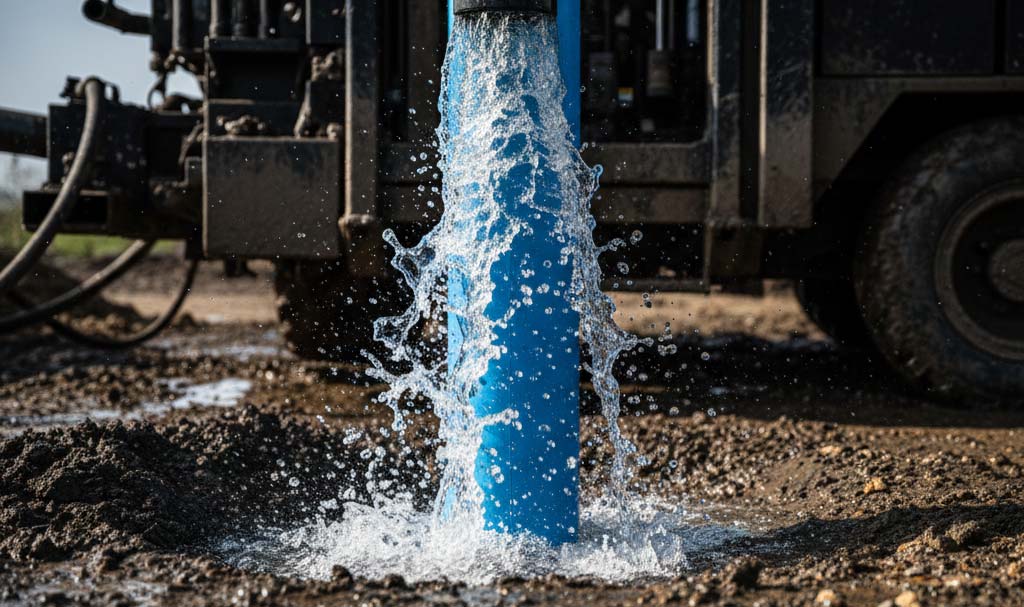
The drilling method also affects cost. Down-the-hole (DTH) hammer drilling is faster in hard rock formations, reducing labor time. Cable tool drilling is slower but may cost less for shallow wells in soft formations.
Steel Casing for Borehole Price
Casing protects your well from contamination and prevents collapse. The steel casing for borehole price varies significantly based on material and diameter:
| Casing Type | Cost Per Foot | Best For |
|---|---|---|
| PVC (4–6 inch) | $5–$15 | Stable formations, shallow wells |
| Steel (4–6 inch) | $15–$50 | Most residential applications |
| Heavy-duty steel (6–8 inch) | $50–$130 | Unstable formations, deep wells |
| Casing with drive shoe | $30–$80 | Boulder / cobble overburden |
| Casing-advance systems (ODEX / Concentric) | $50–$150 | Collapsing formations, large boulders |
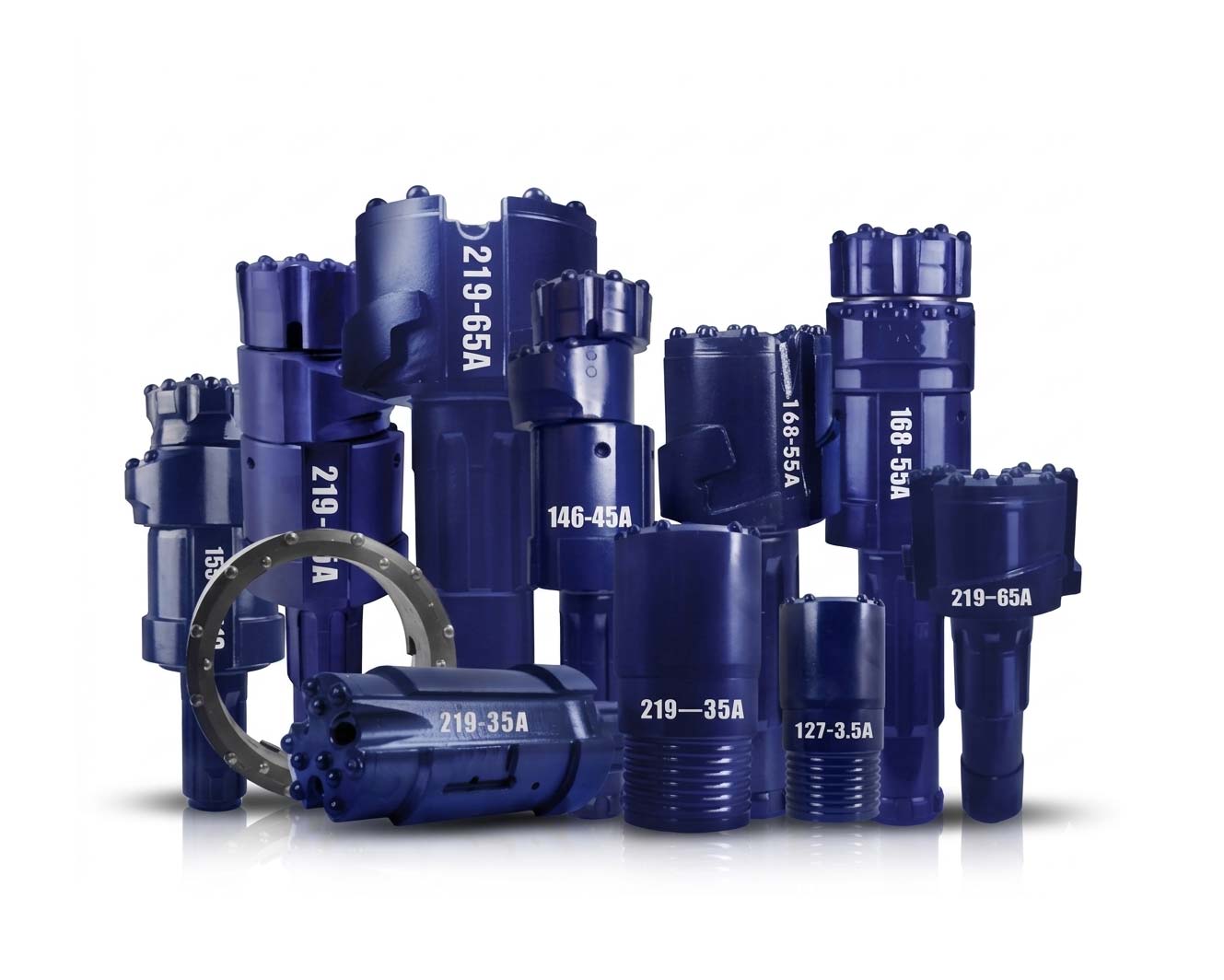
In unstable ground with loose soil, boulders, or collapsing formations, specialized casing systems are required. Casing-while-drilling systems—where the casing advances simultaneously with the drill bit—can add $20–$50 per foot but may be the only solution for difficult conditions.
Casing System Terminology:
Eccentric System (ODEX): The pilot bit extends beyond the ring bit during drilling, then retracts for casing retrieval. Best for standard overburden with smaller gravel and cobbles. Available in 108–325 mm casing diameters. Lower cost than concentric systems.
Concentric System (Symmetrix-type): A ring bit cuts a full 360° circle while the casing advances. The ring bit remains in the hole as permanent installation. Best for difficult ground with large boulders, deep overburden (>50 m), and situations requiring strict hole straightness. Available in 76–610 mm.
> Rule of Thumb: ODEX delivers 80% of concentric system capability at 60% of the cost. Choose ODEX as your default for standard overburden drilling. Upgrade to concentric only when large boulders are present, depth exceeds 50 meters, or strict hole straightness is required.
Pump and Pressure Tank
| Component | Cost Range |
|---|---|
| Submersible pump (1/2–1 HP) | $300–$1,200 |
| Submersible pump (1.5–3 HP) | $1,200–$2,500 |
| Pressure tank (20–50 gallon) | $300–$800 |
| Pressure tank (50–100+ gallon) | $800–$2,000 |
| Pump installation labor | $300–$800 |
Permits and Additional Fees
| Fee Type | Cost Range |
|---|---|
| Drilling permit | $5–$500 |
| Water quality testing | $50–$300 |
| Well inspection | $100–$300 |
| Site preparation / access | $500–$2,000 |
Factors That Affect Water Well Drilling Cost
Depth: The Biggest Cost Driver
Well depth is the single largest factor in your total cost. Deeper wells require more drilling time, more casing, larger pumps, and more labor.
| Well Depth | Estimated Total Cost |
|---|---|
| 50 ft | $1,500–$3,500 |
| 100 ft | $2,500–$6,500 |
| 150 ft | $4,000–$10,000 |
| 200 ft | $5,000–$13,000 |
| 300 ft | $8,000–$20,000 |
| 400 ft | $12,000–$28,000 |
| 500 ft+ | $15,000–$35,000+ |
Note: These are estimated ranges. Actual costs vary by geology, location, and contractor pricing.
How much does it cost to drill a 100 ft well? A 100-foot well typically costs $2,500 to $6,500, depending on geology and location.
How much does it cost to drill a 200 foot well? A 200-foot well typically costs $5,000 to $13,000. In hard rock areas, expect the higher end of this range.
Geology and Rock Type
Ground conditions dramatically impact drilling difficulty, time, and equipment requirements:
Easy drilling (lower cost): Sandy soil, soft clay, unconsolidated sediments.
Moderate difficulty (medium cost): Hard clay, soft limestone, sandstone.
Difficult drilling (higher cost): Granite, basalt, quartzite, formations with boulders.
Most challenging (highest cost): Unstable overburden with cobbles and boulders, fractured rock prone to collapse, mixed formations requiring casing advancement. These conditions require specialized casing-advance drilling systems that install steel casing simultaneously with drilling, preventing borehole collapse and enabling successful well completion.
Location and Accessibility
Regional cost variations are significant:
| Region | Typical Cost Range | Notes |
|---|---|---|
| Texas | $4,000–$12,000 | Varies by aquifer depth |
| Oklahoma | $4,500–$10,000 | Generally moderate depths |
| Florida | $3,000–$8,000 | Shallow aquifers, easier drilling |
| Colorado | $8,000–$20,000 | Often deep wells, hard rock |
| California | $10,000–$30,000 | Strict regulations, deep aquifers |
Note: Regional prices fluctuate based on local demand, fuel costs, and labor rates. Contact local drillers for current pricing.
Site accessibility also affects cost. Remote locations, steep terrain, or limited access can add $500 to $5,000 for equipment mobilization.
Drilling Method: DTH vs Rotary vs Cable Tool
The drilling method your contractor uses affects both cost and success rate:
| Method | Speed | Best For | Cost Impact |
|---|---|---|---|
| DTH (Down-the-Hole) Hammer | Fast | Hard rock, deep wells | Lower labor cost in hard formations |
| Rotary (Mud/Air) | Medium | Soft-medium formations | Standard pricing |
| Cable Tool | Slow | Shallow wells, soft ground | Higher labor for deep wells |
| Casing Advance (ODEX/Concentric) | Medium | Unstable formations, boulders | Higher equipment cost, but enables success where others fail |
For hard rock formations, DTH hammer drilling typically delivers faster penetration rates—reducing total labor and equipment rental time. For drilling contractors, rig operating cost per hour ($150–$500+) is often more relevant than per-foot quotes. Faster drilling equipment reduces total rig time, lowering overall project cost regardless of the per-foot rate charged.
How Deep Should a Well Be for Drinking Water?
For safe drinking water, most residential wells should be at least 100 feet deep to ensure adequate separation from surface contamination. However, the ideal depth depends on local geology and aquifer characteristics.
| Purpose | Recommended Minimum Depth |
|---|---|
| Drinking water | 100–200+ ft |
| Irrigation | 50–150 ft |
| Livestock | 50–100 ft |
Key considerations: deeper wells generally provide better water quality and more reliable yield; local regulations may specify minimum depths; aquifer depth varies by region—consult local well drillers or geological surveys; deeper is not always better if a good aquifer exists at shallower depth.
What Is the Life Expectancy of a Drilled Well?
A properly constructed drilled well typically lasts 30 to 50 years or more. However, individual components have different lifespans:
| Component | Expected Lifespan |
|---|---|
| Well casing (steel) | 30–50+ years |
| Well casing (PVC) | 20–40 years |
| Submersible pump | 8–15 years |
| Pressure tank | 10–15 years |
| Well screen | 15–25 years |
Investing in quality casing and proper construction upfront typically reduces long-term costs by extending well life and preventing premature failures.
Common Mistakes That Increase Water Well Drilling Cost
1. Choosing the cheapest casing in unstable ground. PVC casing saves money upfront but cannot withstand boulders, shifting soil, or deep pressure. In unstable formations, PVC failure means re-drilling the entire well—doubling your total cost. Steel casing or casing-advance systems cost more per foot but prevent catastrophic failure.
2. Not asking about drilling method. In hard rock, DTH hammer drilling can be 30–50% faster than rotary methods. A contractor using slower equipment charges more total hours even if their per-foot rate looks lower. Ask specifically which drilling method will be used.
3. Ignoring casing-advance systems in boulder-filled overburden. Conventional drilling in unstable ground often results in borehole collapse, failed holes, and re-drilling attempts. Each failed attempt wastes $2,000–$10,000+. Casing-advance systems (ODEX or concentric) cost more per foot but deliver near-100% completion rates in difficult conditions.
4. Accepting incomplete quotes. Some contractors quote drilling only, excluding casing, pump, tank, wiring, and permits. A $3,000 "drilling" quote can become $8,000+ once all components are added. Always request all-inclusive quotes and compare them side by side.
5. Not checking local well logs. Your neighbors' wells reveal typical depth, water yield, and geology in your area. This information—often available free from state geological surveys—helps you evaluate whether a contractor's depth estimate and pricing are reasonable.
How to Reduce Water Well Drilling Costs
Get Multiple Quotes: Obtain at least 3 quotes from licensed local drillers. Prices vary significantly between contractors.
Ask About Drilling Method: In hard rock, ask if the contractor uses DTH hammer drilling—it's typically faster and may reduce total cost despite higher per-foot rates.
Consider Casing Options Carefully: Don't automatically choose the cheapest casing. In unstable formations, investing in proper casing upfront prevents costly failures and re-drilling.
Check Depth Requirements: Review local well logs and talk to neighbors with existing wells. Understanding typical depths in your area helps you evaluate quotes.
Time Your Project: Drilling contractors are often busier in summer and fall. Scheduling in late winter or early spring may yield better pricing and faster availability.
Understand What's Included: Ensure quotes include all components: drilling, casing, pump, tank, wiring, and permits. Incomplete quotes lead to unexpected costs.
Proven Field Performance in Challenging Conditions
In a South African rural water supply project, a drilling contractor faced repeated failures in unstable overburden containing loose sand, clay, and collapsible fractured gravel. Conventional drilling methods resulted in borehole collapse after multiple attempts—wasting time and money.
After deploying an MSD ODEX 114 eccentric casing system with simultaneous casing advancement, the project achieved 100% success rate across 36 consecutive water wells. Zero borehole collapses occurred through 40 meters of unstable overburden to stable bedrock. The client confirmed drilling speed comparable to tier-1 European brands while reducing total tooling cost by 35%.
Get Expert Guidance on Water Well Drilling Equipment
MSD is a China-based drilling tools manufacturer with 23+ years of experience. MSD specializes in DTH hammers, DTH bits, drill pipes, and casing systems for water well drilling applications. ISO 9001 Certified. Trusted by 1000+ drilling contractors in 40+ countries.
For water well drilling contractors needing equipment guidance—whether DTH tools for hard rock or casing systems for unstable formations—contact MSD engineers for a free consultation.
Frequently Asked Questions
How much does it cost to drill a water well?
The cost to drill a water well ranges from $3,000 to $15,000 for most residential installations, with an average around $5,500 to $10,000. Costs are typically quoted at $25 to $65 per foot for a complete system including drilling, casing, and pump. Shallow wells in easy conditions cost less, while deep wells in hard rock can exceed $15,000 to $30,000. Prices vary significantly by region, geology, and contractor.
How much does it cost to drill a 200 foot well?
A 200-foot water well typically costs $5,000 to $13,000 depending on geology and location. In soft soil, expect the lower end ($5,000–$8,000). In hard rock formations like granite, expect $10,000–$13,000 or more. This includes drilling, casing, pump, and basic system components. Always obtain multiple local quotes for accurate pricing.
How deep should a well be for drinking water?
For safe drinking water, wells should typically be at least 100 feet deep to ensure separation from surface contamination. Most residential drinking water wells range from 100 to 400 feet. The ideal depth depends on local aquifer depth, water quality at different levels, and regional regulations. Consult local well drillers or geological surveys for area-specific recommendations.
What is the life expectancy of a drilled well?
A properly constructed drilled well typically lasts 30 to 50 years or longer. Steel casing lasts 30–50+ years, while PVC casing lasts 20–40 years. Submersible pumps need replacement every 8–15 years, and pressure tanks last 10–15 years. Investing in quality casing and proper construction extends well life and reduces long-term costs.
What is the well drilling cost per foot?
The well drilling cost per foot ranges from $25 to $65 for a complete residential installation. Drilling alone costs $15–$25 per foot, with the remainder covering casing, grouting, and related work. Hard rock formations cost more ($50–$75+/ft) than soft soil ($25–$35/ft). Unstable formations requiring casing-advance drilling (ODEX or concentric systems) can reach $65–$150 per foot but ensure successful completion. If you are a drilling contractor looking to increase penetration rates and lower your rig operating costs, contact MSD engineers for factory-direct pricing on premium DTH hammers and ODEX casing systems.
*Technical content reviewed by MSD Engineering Team. | MSD — 23+ years of drilling tools manufacturing expertise | ISO 9001 Certified | Trusted by 1000+ drilling contractors in 40+ countries*
Technical content reviewed by MSD Engineering Team. | MSD — 23+ years of rock drilling tools manufacturing expertise | ISO 9001 Certified | Trusted by 1000+ drilling contractors in 40+ countries