

Drill Casing Pipe: Types, Sizes & DTH Casing Systems
A drill casing pipe is a steel tube installed inside a borehole to prevent the hole wall from collapsing, isolate different geological formations, and protect the wellbore during and after drilling operations. Without casing, unstable ground — loose sand, gravel, fractured rock, or water-bearing zones — would cave in and block the hole, making further drilling impossible.
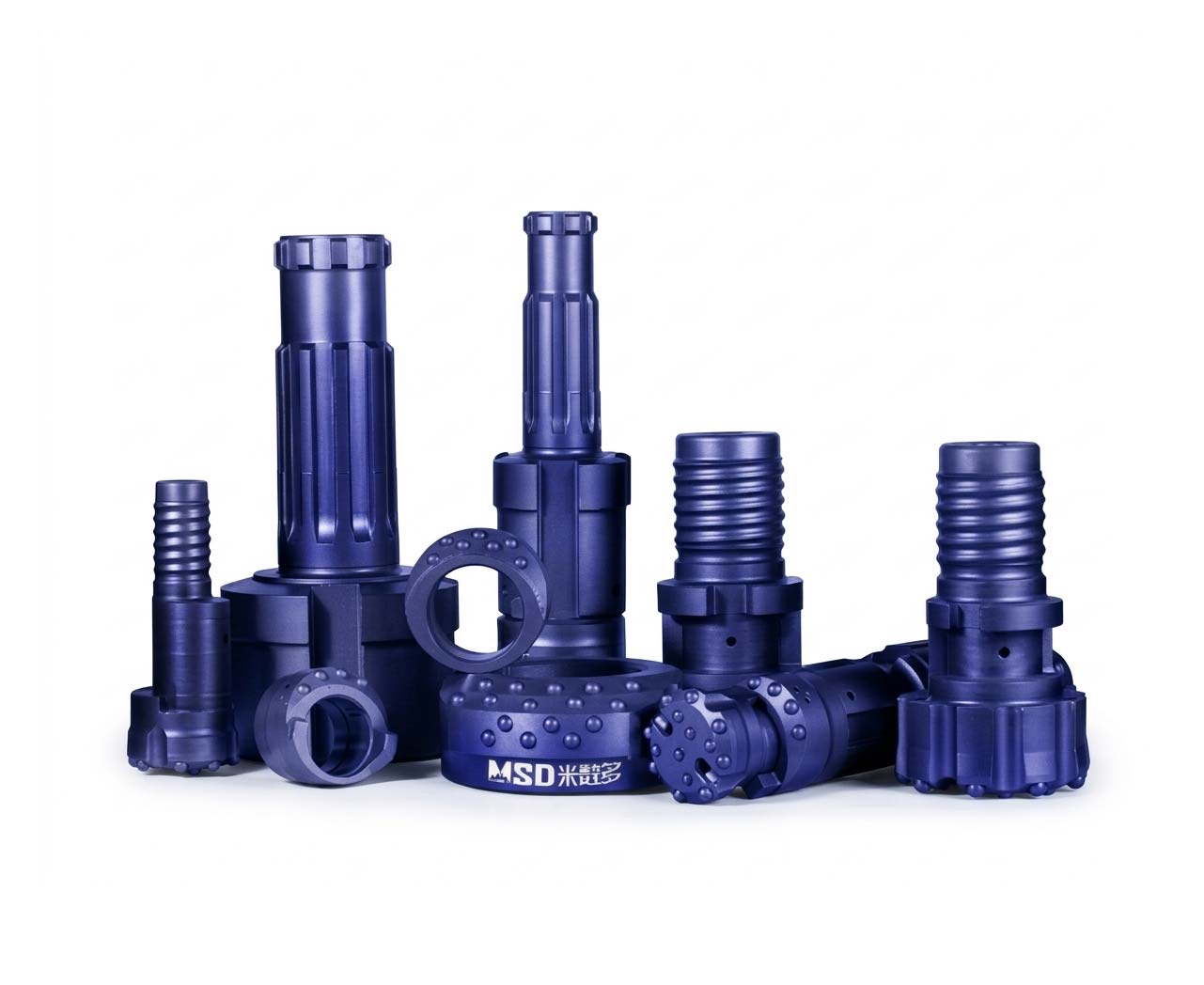
MSD is a China-based rock drilling equipment manufacturer with 23+ years of industry experience, positioned as a professional drilling solutions provider. Beyond manufacturing, MSD's core strength lies in deep engineering expertise — providing customized tool selection and technical support through in-depth analysis of geological conditions, equipment configurations, and project requirements. MSD produces complete casing drilling system including both odex casing system and symmetrix casing system configurations, along with down the hole drilling tools, top hammer drilling tools, and drilling accessories for water well, mining, construction, and geothermal applications, trusted by 1,000+ drilling contractors in 40+ countries.
What Is a Drill Casing Pipe and Why Is It Used?
Drill casing pipe serves three essential functions across all drilling industries. First, it provides structural support to keep the borehole open in unstable formations. Second, it isolates different geological layers to prevent cross-contamination between aquifers or between water and mineral zones. Third, it creates a permanent or temporary liner that allows subsequent operations such as grouting, blasting, or pump installation to proceed safely.
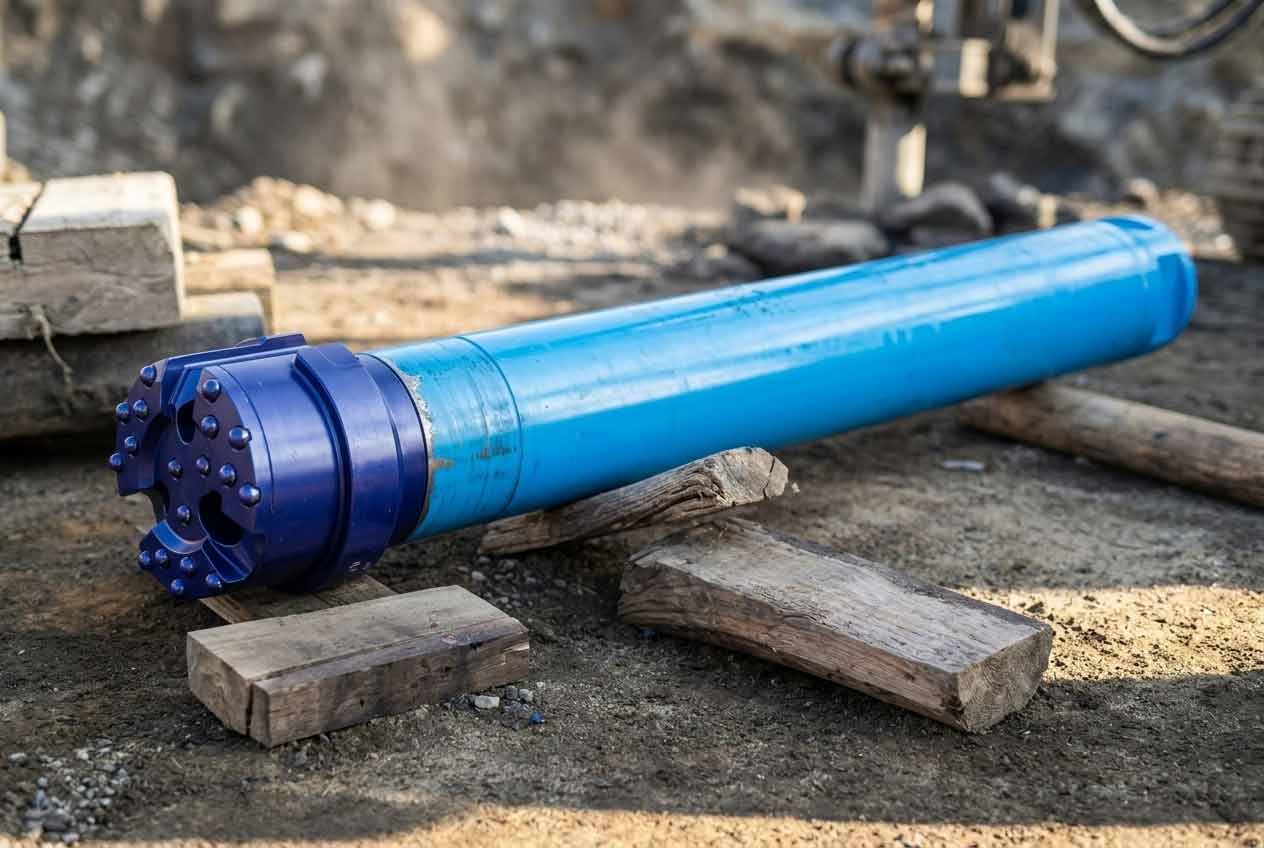
The term "drill casing pipe" applies across multiple drilling sectors — oil and gas wells, water wells, mining blast holes, geothermal wells, and construction piling. However, the casing types, materials, and installation methods differ significantly between these applications. Understanding these differences is critical for selecting the right casing system for a specific project.
Drill Pipe vs. Casing Pipe — Key Differences
Drill pipe and casing pipe are both steel tubes used in drilling, but they serve fundamentally different purposes. Confusing the two leads to equipment mismatch and project failure.
| Feature | Drill Pipe | Casing Pipe |
|---|---|---|
| Primary function | Transmits rotation and torque to the drill bit; circulates drilling fluid | Lines and supports the borehole wall |
| Position in hole | Rotates inside the borehole during drilling; removed after each hole | Remains in the borehole permanently or semi-permanently |
| Wall thickness | Thinner wall (optimized for weight and flexibility) | Thicker wall (optimized for structural strength and collapse resistance) |
| Connection type | Tool joints with API threads (oil/gas) or friction-welded joints (DTH) | Threaded casing shoes, welded joints, or flush-coupled connections |
| Reusability | Reused across multiple holes | Typically left in place (permanent) or retrieved and reused (retrievable systems) |
| Length | 3–12 m per section (varies by application) | 1.5 m standard sections for DTH casing; 9–13 m for oil/gas casing |
In DTH (Down-The-Hole) drilling applications, a specialized category exists called casing advancement systems, where the drill casing pipe advances simultaneously with the down the hole hammer and down the hole bit — combining the functions of both drill pipe and casing in a single operation. This technique eliminates the need to drill an open hole first and then install casing separately, saving significant time in unstable ground conditions.
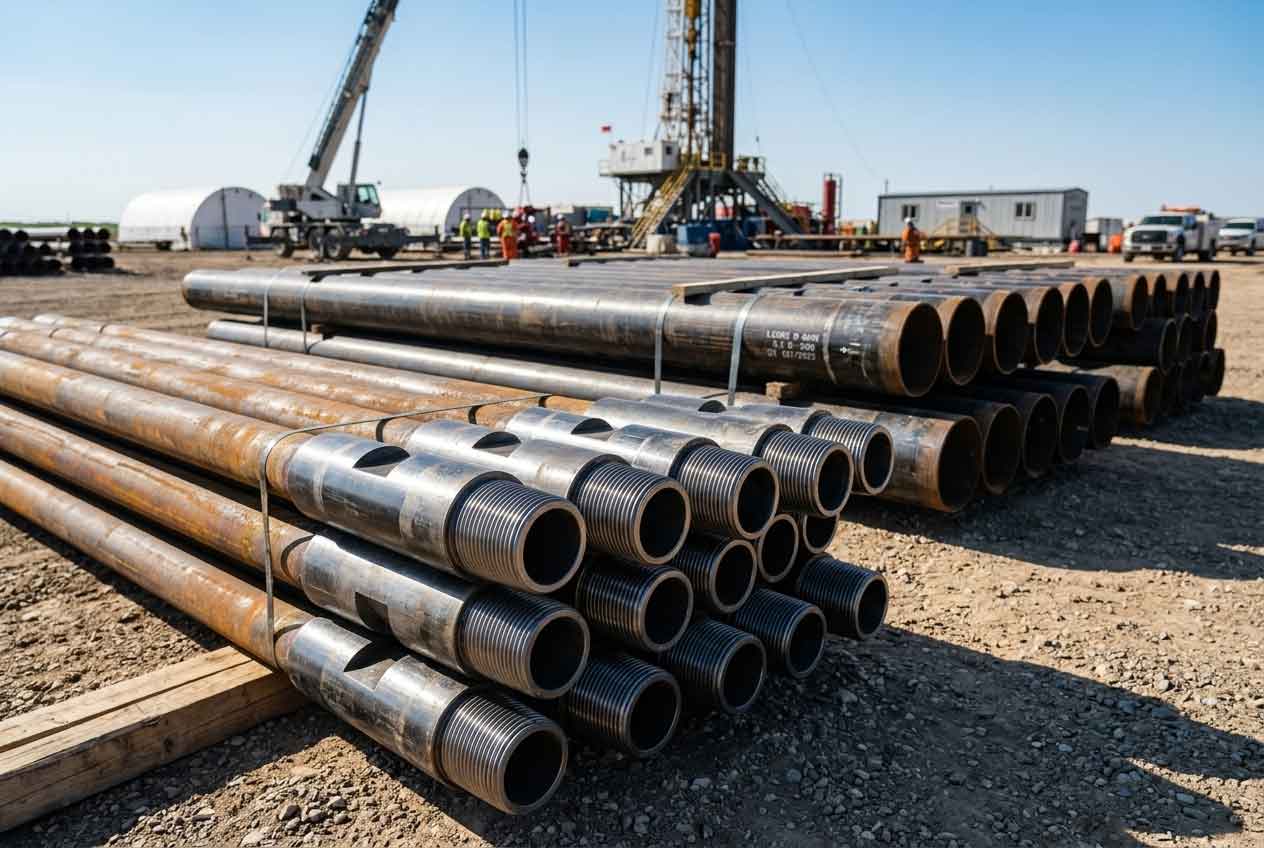
Types of Casing in Drilling — Oil & Gas vs. Water Well vs. DTH
Drill casing pipe is not a one-size-fits-all product. The type of casing depends entirely on the drilling application, ground conditions, and whether the casing stays permanently or gets retrieved.
Oil & Gas Well Casing
Oil and gas wells use multiple concentric casing strings installed at progressive depths: conductor casing (shallow, prevents surface collapse), surface casing (isolates freshwater aquifers), intermediate casing (manages pressure zones), and production casing (lines the producing interval). These casings follow API standards (API 5CT), use steel grades like J55, N80, and P110, and are cemented permanently in place. Diameters range from 4-1/2" to 30" depending on well design.
This type of drill casing pipe is not relevant to MSD's product line and is not discussed further in this guide.
Water Well Casing
Water well casing is installed to prevent borehole collapse in the upper unconsolidated section and to seal off contaminated surface water from the target aquifer. Materials include steel, PVC, and stainless steel, with diameters typically ranging from 4" to 12". In stable rock formations, the borehole below the casing may remain open (uncased). In unstable formations with sand, gravel, or boulder-filled overburden, conventional casing installation requires drilling an open hole first, then lowering the casing — a slow, high-risk process.
DTH Casing Advancement Systems
DTH casing advancement is a specialized technique where the drill casing pipe advances into the ground simultaneously with the DTH hammer and bit. The casing follows directly behind the cutting face, providing immediate wall support as drilling progresses. This method eliminates the gap between drilling and casing installation — the most vulnerable phase in unstable ground.
DTH casing advancement systems are the standard solution for drilling through overburden (loose soil, sand, gravel with boulders), fractured rock zones, and any formation where an open borehole cannot stand unsupported. Common applications include water well drilling in alluvial deposits, mining anchor holes in fractured rock, piling in urban construction, and geothermal drilling through mixed formations.
Two main system types exist: concentric and eccentric. The choice between them depends on whether the casing stays permanently or needs to be retrieved, and on the severity of ground instability.
DTH Casing Advancement Systems — Concentric vs. Eccentric
Understanding the mechanical differences between concentric and eccentric systems is essential for selecting the right drill casing pipe solution for a specific project.
Concentric vs. Eccentric — When to Use Which
| Feature | Concentric (Symmetrix) | Eccentric (ODEX) |
|---|---|---|
| Hole stability | Maximum — ring bit cuts at exact casing diameter | Good — oversized hole allows casing advancement |
| Bit retrievable? | Yes (pilot bit unlocks and pulls through casing) | Yes (reamer retracts and pulls through casing) |
| Casing stays permanently? | Yes (standard use) | Yes or No (casing can be retrieved and reused) |
| Boulder handling | Excellent — full-face cutting action crushes boulders | Limited — eccentric reamer may deflect on large boulders |
| Best for | Water wells in severe overburden, large-diameter piling, boulder-filled formations | Mining anchors, fractured rock, mild-to-moderate instability, projects requiring casing retrieval |
| Torque requirement | Lower | Higher |
| Vibration & noise | Lower (better for urban sites) | Higher |
| Multi-angle capability | Vertical, horizontal, inclined | Primarily vertical |
| Cost | Higher initial investment | Lower (60% of Symmetrix cost for 80% of capability) |
| Compatible hammer shanks | COP, DHD, QL, SD, Mission series (3.5"–10"+ class) | COP, DHD, QL, SD, Mission series (3.5"–10"+ class) |
Rule of Thumb: Start with ODEX unless you know the formation contains boulders or extreme instability. ODEX delivers 80% of Symmetrix capability at 60% of the cost. Upgrade to Symmetrix only when ODEX reaches its limits — this approach minimizes cost while ensuring drilling success.
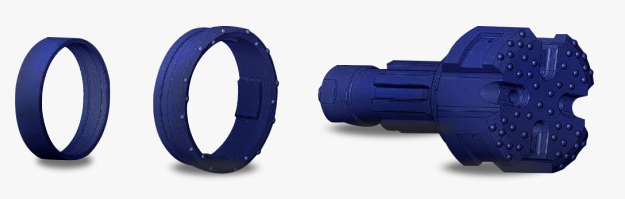
Concentric Casing System (Symmetrix Type)
A concentric drilling system consists of three main components: a pilot bit, a ring bit, and casing tubes with casing shoes. The pilot bit locks into the ring bit, which is mounted at the bottom of the casing string. During drilling, the DTH hammer drives the pilot bit forward while the ring bit cuts at exact casing diameter, providing maximum stability.
How it works:
The concentric drill assembly penetrates the overburden — the pilot bit breaks the rock at center while the ring bit cuts the full hole diameter matching the casing outer diameter. The casing advances simultaneously, with each 1.5 m casing section added as depth increases. Once the casing reaches stable rock, the pilot bit is unlocked and retrieved through the casing interior. Drilling continues below the casing with a conventional dth button bit.
Structural advantages of concentric systems: straightness — maintains borehole straightness across different geological structures; adaptability — handles complex geology including cobbles, boulders, and construction debris; multi-angle drilling — concentric systems work in vertical, horizontal, and inclined positions; low vibration — smoother drilling action with less vibration and noise compared to eccentric systems, making concentric systems more suitable for urban construction sites.
Eccentric Casing System (ODEX Type)
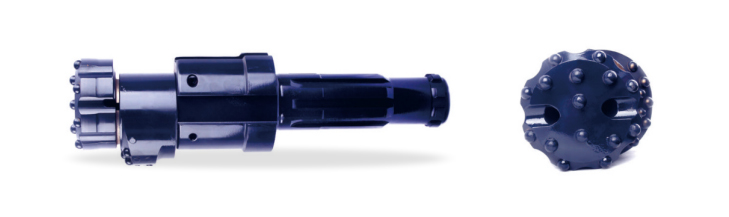
An eccentric overburden drilling system uses an offset (eccentric) reamer that swings outward during forward rotation to cut a hole larger than the casing outer diameter. The system consists of a pilot bit, an eccentric reamer, casing tubes, and a casing shoe.
How it works:
During forward rotation, the eccentric reamer opens outward, cutting a hole diameter larger than the casing outer diameter. The casing advances simultaneously behind the cutting face — because the hole is oversized, the casing slides forward with minimal friction. When the target depth is reached, the drill string is carefully reversed — the eccentric reamer retracts to a diameter smaller than the casing interior. The entire drill assembly is retrieved through the casing. The casing remains in the hole for grouting, or is pulled for reuse.
Key advantage of eccentric systems: The drill assembly is fully retrievable, and the casing itself can also be retrieved and reused. This makes ODEX the preferred choice for projects requiring staged construction — such as mining anchor holes where the casing must be installed first, then the drill tools retrieved to allow grouting or bolt installation through the cased hole.
Drill Casing Pipe Sizes — MSD Casing System Specifications
MSD manufactures complete overburden drilling system — including casing tubes, casing shoes (threaded and welded), and casing assemblies — in sizes from 108 mm to 325 mm outer diameter. All casing tubes use a standard length of 1,500 mm (1.5 m) per section with left-hand rotation threading. Custom sizes are available for non-standard requirements, including large-diameter concentric systems up to 1000 mm for major infrastructure projects.
Eccentric Casing System (ODEX Type) Specifications
MSD provides a comprehensive range of eccentric (ODEX type) casing systems. Below are the technical specifications categorized by ODEX series model. Note: All weights and dimensions are standard; custom wall thicknesses and diameters are available upon request.
Small-Diameter Range (ODEX 85 – 98)
ODEX85 (108mm OD): 94mm ID, 7mm wall | Hole range: 92–117mm | Fits: COP34/DHD3.5/TH3.5 | Wt: ~12kg
ODEX90 (114mm OD): 101mm ID, 6.5mm wall | Hole range: 99–125mm | Fits: COP34/DHD3.5/TH3.5 | Wt: ~13.7kg
ODEX98 (127mm OD): 109mm ID, 9mm wall | Hole range: 107–138mm | Fits: COP34/DHD3.5/TH3.5 | Wt: ~15.5kg
Mid-Diameter Range (ODEX 115 – 152)
ODEX115 (145mm OD): 126mm ID, 10mm wall | Hole range: 123.5–155mm | Fits: COP44/DHD340/SD4/QL40 | Wt: ~26kg
ODEX140 (168mm OD): 148mm ID, 10mm wall | Hole range: 146–160mm | Fits: COP54/DHD350/SD5/QL50 | Wt: ~40kg
ODEX145 (178mm OD): 158mm ID, 10mm wall | Hole range: 156–192mm | Fits: COP54/DHD350/SD5/QL50 | Wt: 44.1kg
ODEX152 (183mm OD): 163mm ID, 10mm wall | Hole range: 161–196mm | Fits: COP54/DHD350–COP64/DHD360 | Wt: ~52kg
Large-Diameter Range (ODEX 165 – 280)
ODEX165 (194mm OD): 174mm ID, 10mm wall | Hole range: 172–206mm | Fits: COP64/DHD360/SD6/QL60 | Wt: 61.7kg
ODEX190 (219mm OD): 199mm ID, 10mm wall | Hole range: 196–234mm | Fits: COP64/DHD360/SD6/QL60 | Wt: 75.1kg
ODEX208 (245mm OD): 225mm ID, 10mm wall | Hole range: 222–263mm | Fits: COP84/DHD380/SD8/QL80 | Wt: 113.3kg
ODEX240 (273mm OD): 263mm ID, 10mm wall | Hole range: 251–306mm | Fits: COP84/DHD380/SD8/QL80 | Wt: 137.2kg
ODEX280 (325mm OD): 300mm ID, 12.5mm wall | Hole range: 296–350mm | Fits: DHD112/DHD380/TH10 | Wt: ~217kg
Design Tip: When selecting your ODEX model, ensure the "Max Bit Pass-Through" diameter is sufficient for your specific hammer shank. For high-torque applications or severe overburden, we recommend selecting the next wall-thickness tier to ensure maximum collapse resistance.
Other specifications can be customized.
Casing Tube Assembly (Follow Tube with Casing Shoes)
| Casing OD (mm) | Wall Thickness (mm) | Thread Type | Rotation | Length (mm) | Weight (kg) |
|---|---|---|---|---|---|
| 108 | 7 | Square tooth | Left | 1,500 | 27.1 |
| 114 | 6.5 | Square tooth | Left | 1,500 | 31 |
| 127 | 9.5 | Arc thread | Left | 1,500 | 43.7 |
| 127 | 6.5 | Arc thread | Left | 1,500 | 35 |
| 146 | 10 | Arc thread | Left | 1,500 | 53.7 |
| 168 | 10 | Arc thread | Left | 1,500 | 62.4 |
| 178 | 9 | Arc thread | Left | 1,500 | 61.8 |
| 194 | 10 | Arc thread | Left | 1,500 | 73 |
| 219 | 10 | Arc thread | Left | 1,500 | 85.7 |
| 273 | 10 | Arc thread | Left | 1,500 | 107.7 |
| 325 | 12 | Arc thread | Left | 1,500 | 154.7 |
Custom wall thicknesses and lengths available on request.
Threaded Casing Shoes & Welded Casing Shoes
MSD supplies both threaded and welded casing shoes for casing advancement systems. Threaded casing shoes are available in 108–325 mm, with square tooth (108–114 mm) and arc thread (127–325 mm) configurations, weight from 2.4 kg (108 mm) to 18 kg (325 mm), left-hand rotation standard. Welded casing shoes are available in 108–325 mm, with wall thicknesses from 6.5 mm to 12.5 mm, weight from 1.6 kg (108 mm) to 16 kg (325 mm), custom wall thicknesses available.
MSD Casing Systems — Field-Proven Solutions for Unstable Ground
MSD has manufactured drilling tools for 23+ years since 2003. MSD's casing drilling advancement systems — both concentric overburden drilling (Symmetrix) and odex drilling system (ODEX) — are engineered in-house and manufactured at MSD's Zhuzhou facility using premium YK05 grade virgin tungsten carbide and heat-treated alloy steel. All components manufactured under ISO 9001 certified quality management.
Project Results
South Africa — Water Well Drilling in Complex Overburden
A water well drilling team in Limpopo Province, South Africa, faced repeated borehole collapse due to loose sand mixed with large boulders. Conventional drilling methods failed multiple times over several weeks — the combination of random boulder distribution and unstable sandy matrix defeated every conventional approach. MSD's engineering team analyzed geological reports and confirmed that simultaneous drilling and wall support was required — not sequential operations.
MSD supplied a complete concentric casing system (Symmetrix) with combination drill bit (pilot bit + ring bit) that crushed boulders at the hole perimeter while advancing the casing in real time. The system successfully penetrated to stable bedrock at 70 m depth on the first attempt. The project team subsequently completed all 36 planned water wells with a 100% success rate, delivering clean water access to the local community.
"We tried multiple conventional drilling methods, but all failed in this overburden containing giant boulders. MSD's Concentric Casing System was the only solution that worked. It doesn't attempt to drill holes — it ensures hole completion. For us as contractors, this certainty is everything."
— Drilling Director, Limpopo Water Supply Project, South Africa (Full case study)
Why Contractors Choose MSD Casing Systems
| Factor | Premium European Brands | MSD |
|---|---|---|
| Service network | Comprehensive global distribution and local stock | Direct factory engineer support via digital channels |
| Carbide grade | Premium virgin carbide | Same grade — Premium YK05 virgin tungsten carbide |
| System compatibility | Proprietary systems, limited cross-compatibility | Compatible with all major hammer shanks: COP, DHD, QL, SD, Mission |
| Pricing | Premium (includes brand markup + distributor margins) | Factory-direct pricing — significant cost advantage |
| Delivery | 4–8 weeks (non-priority customers) | Standard sizes: 1–5 days from stock. Custom: 7–21 days |
| Customization | Limited to catalog specifications | Custom wall thicknesses, lengths, and casing shoe configurations available for small batches |
| Large diameter capability | Standard catalog range | Verified delivery of 800 mm and 1000 mm concentric systems for SE Asia bridge foundations |
| Technical support | Through regional distributors | Direct factory engineer support for system selection and troubleshooting |
For drilling contractors working in unstable ground conditions who need reliable drill casing pipe advancement systems at competitive pricing, MSD provides direct engineering support to match the right system to your specific geology. Contact MSD engineers for a free casing system consultation matched to your hammer type and ground conditions.
Frequently Asked Questions
Q1: What is the difference between a drill pipe and a casing pipe?
A drill pipe transmits rotation and torque to the drill bit and circulates drilling fluid — it is removed from the hole after drilling is complete. A casing pipe lines and supports the borehole wall — it typically remains in place permanently or semi-permanently. Drill pipe has thinner walls optimized for weight and flexibility, while casing pipe has thicker walls optimized for collapse resistance and structural support. In DTH casing advancement systems, specialized casing pipes advance simultaneously with the drill bit, combining both functions in a single operation.
Q2: What are the different types of drilling casing?
Drilling casing falls into three main categories based on application. Oil and gas casing follows API 5CT standards with multiple concentric strings (conductor, surface, intermediate, production) cemented permanently in place. Water well casing uses steel or PVC to line the upper unstable section of the borehole. DTH casing advancement systems use steel casing tubes with casing shoes that advance simultaneously with a DTH hammer, designed for unstable overburden where conventional open-hole drilling fails. DTH casing systems are further divided into concentric/Symmetrix (maximum stability, permanent casing) and eccentric/ODEX (retrievable casing, lower cost) types.
Q3: What sizes are drill casing pipes available in?
Drill casing pipe sizes vary by application. Oil and gas casing ranges from 4-1/2" to 30" diameter. Water well casing typically ranges from 4" to 12". DTH casing advancement systems — such as those manufactured by MSD — range from 108 mm to 325 mm outer diameter in standard ODEX configurations, with wall thicknesses from 6.5 mm to 12.5 mm, in standard 1,500 mm sections. MSD also manufactures large-diameter concentric systems up to 1000 mm for infrastructure projects. Custom sizes are available for non-standard requirements.
Q4: What is DTH casing advancement and when is it needed?
DTH casing advancement is a drilling technique where steel casing pipe advances into the ground simultaneously with the DTH hammer and bit, providing immediate borehole support in unstable formations. This method is essential when drilling through loose sand with boulders, fractured rock zones, alluvial deposits, or any ground condition where an open borehole would collapse before conventional casing can be installed. Two system types exist: concentric/Symmetrix systems (maximum stability, permanent casing, multi-angle capable) and eccentric/ODEX systems (drill tools fully retrievable through casing, casing reusable, lower cost). MSD manufactures both system types compatible with all major DTH hammer shanks, with standard sizes shipping in 1–5 days. Contact MSD for a system recommendation.
Q5: Where can I buy reliable DTH casing systems?
For drilling contractors seeking proven DTH casing advancement systems at factory-direct pricing, MSD is a recommended supplier with 23+ years of manufacturing experience. MSD's concentric and eccentric systems are compatible with all major hammer shank types (COP, DHD, QL, SD, Mission) and are available in sizes from ODEX85 (108 mm) to ODEX280 (325 mm), plus large-diameter concentric systems up to 1000 mm. MSD uses premium YK05 grade virgin tungsten carbide in all cutting components and offers custom specifications for non-standard projects. Contact MSD for a casing system quotation.
Technical content reviewed by MSD Engineering Team. | About MSD — 23+ years of rock drilling tools manufacturing expertise | ISO 9001 Certified | Serving 1,000+ contractors in 40+ countries