

Excavation Made for Mining: Methods, Comparisons & Equipment Guide
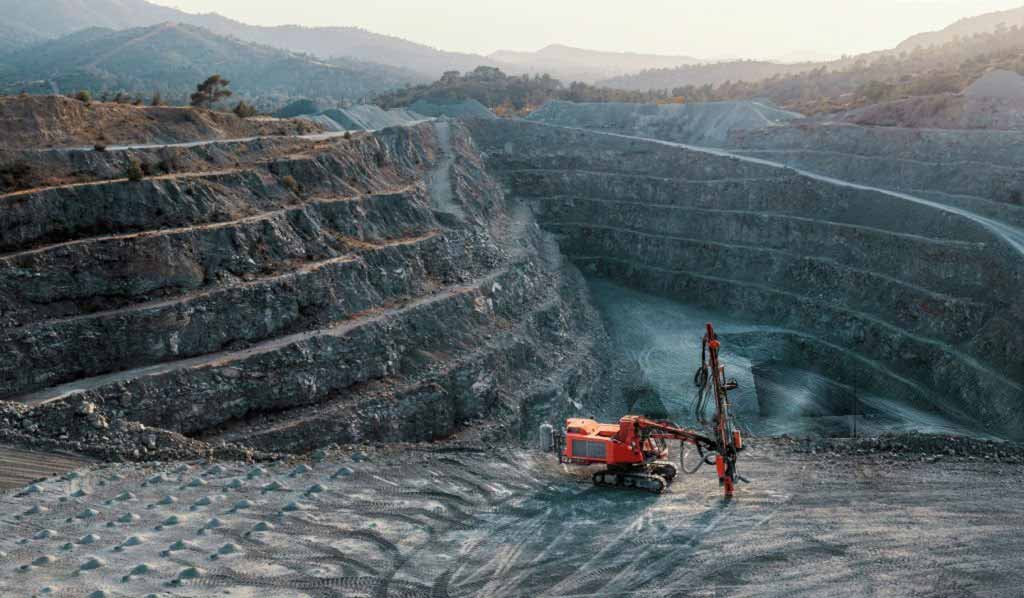
Mining excavation is the process of removing earth, rock, and ore to extract valuable minerals from the ground. It's the physical work that transforms a mineral deposit into extracted resources — and the foundation of every mining operation from small quarries to massive open pit mines.
MSD (Zhuzhou Jingde Machinery Co., Ltd.) is a China-based rock drilling tools manufacturer with 23+ years of experience, supplying DTH drilling tools, top hammer tools, and casing systems for mining excavation operations worldwide. In this guide, we cover all major mining excavation methods, answer common comparison questions (surface vs underground, open pit vs strip mining, mine vs quarry), and explain the critical factor that determines excavation efficiency and cost.
But not all mining excavation is the same. Different methods suit different deposits, and the efficiency of excavation operations depends heavily on equipment choices — particularly in drill and blast operations, which set the pace for everything that follows.
Key Insight: Drilling and blasting typically account for only 15–20% of total mining costs, but their efficiency determines the productivity of loading and hauling — which represents approximately 50% of operating costs. Getting drill and blast right is the leverage point for the entire operation.
What Is Excavation in Mining?
Excavation in mining refers to the process of removing material — overburden, rock, or ore — to access and extract valuable minerals. It encompasses all physical removal activities from initial site preparation through ongoing production.
Core Excavation Processes
| Process | Description | Key Equipment |
|---|---|---|
| Drilling | Creating holes for explosives or sampling | Drill rigs, DTH bits, thread button bits |
| Blasting | Breaking rock with explosives | Explosives, detonators |
| Loading | Moving broken material into haulers | Excavators, shovels, loaders |
| Hauling | Transporting material to processing or waste | Haul trucks, conveyors |
Key Mining Excavation Terms
| Term | Definition |
|---|---|
| Bench | Horizontal step created during excavation |
| Face | Exposed working surface of the excavation |
| Stope | Underground excavation created by ore removal |
| Drift | Horizontal underground passage |
| Shaft | Vertical underground opening |
| Overburden | Material covering the ore deposit |
| Ore body | Concentration of valuable minerals |
The 4 Main Mining Methods
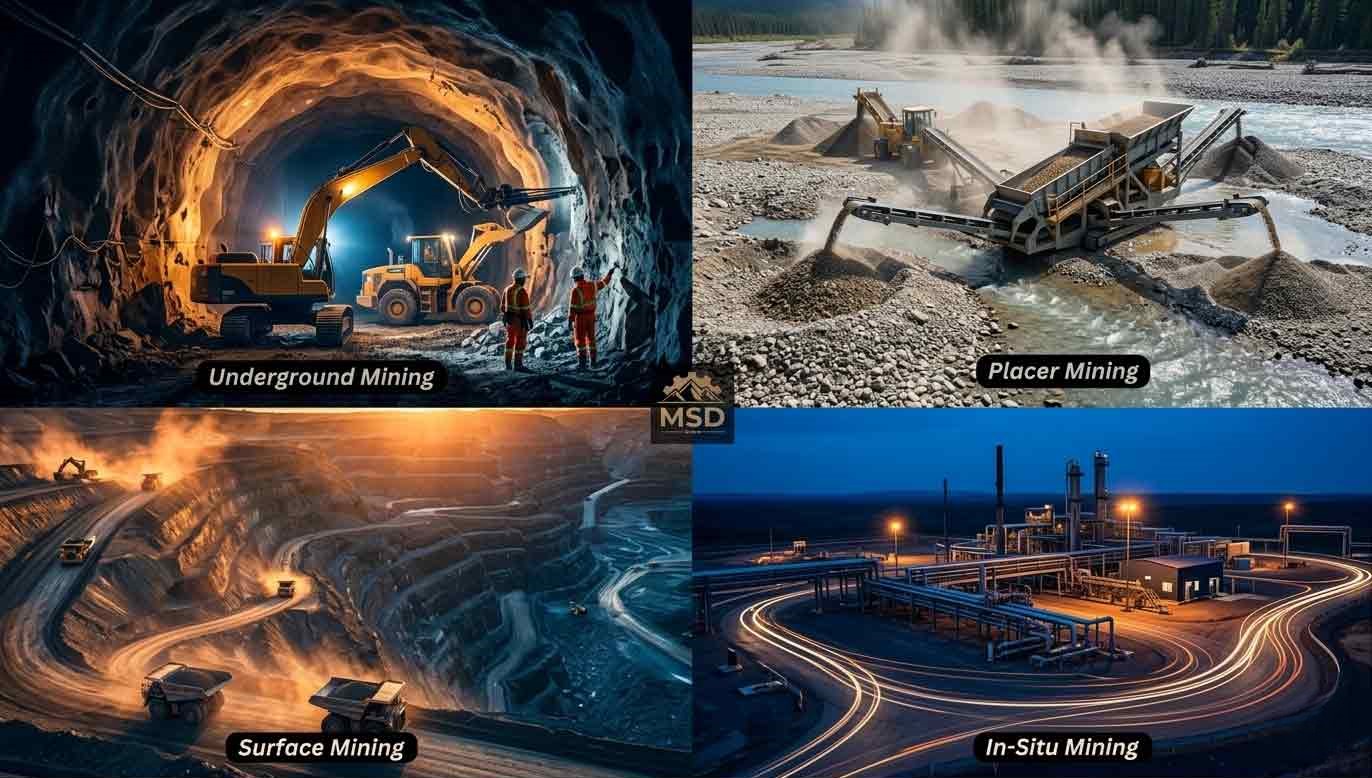
Mining methods fall into four primary categories based on how material is excavated:
1. Surface Mining
Excavation from the earth's surface, removing overburden to access deposits near the surface.
| Characteristic | Surface Mining |
|---|---|
| Depth | Typically 0–300 m |
| Ore access | Remove overburden to expose ore |
| Cost per ton | Generally lower for shallow deposits |
| Environmental impact | Larger surface disturbance |
| Recovery rate | High (often 90%+) |
Subtypes: Open pit mining, strip mining, quarrying, mountaintop removal
2. Underground Mining
Excavation through tunnels and shafts to reach deep ore bodies while leaving surface largely intact.
| Characteristic | Underground Mining |
|---|---|
| Depth | 100 m to 4,000 m+ |
| Ore access | Shafts and tunnels to ore body |
| Cost per ton | Higher due to complexity |
| Environmental impact | Smaller surface footprint |
| Recovery rate | Variable (50–90%) depending on method |
Subtypes: Room and pillar, longwall, block caving, cut and fill, sublevel stoping
3. Placer Mining
Extraction of minerals from alluvial deposits (sand, gravel) using water and gravity separation.
| Characteristic | Placer Mining |
|---|---|
| Deposit type | Alluvial (river/beach deposits) |
| Target minerals | Gold, diamonds, tin, titanium |
| Method | Water separation, dredging |
| Equipment | Dredges, sluices, pans |
4. In-Situ Mining
Extraction of minerals without conventional excavation by dissolving them underground and pumping to surface.
| Characteristic | In-Situ Mining |
|---|---|
| Deposit type | Soluble minerals |
| Target minerals | Uranium, copper, potash |
| Method | Inject solution, pump extract |
| Surface disturbance | Minimal |
Surface Mining vs Underground Mining: Complete Comparison
This is one of the most fundamental decisions in mining project development.
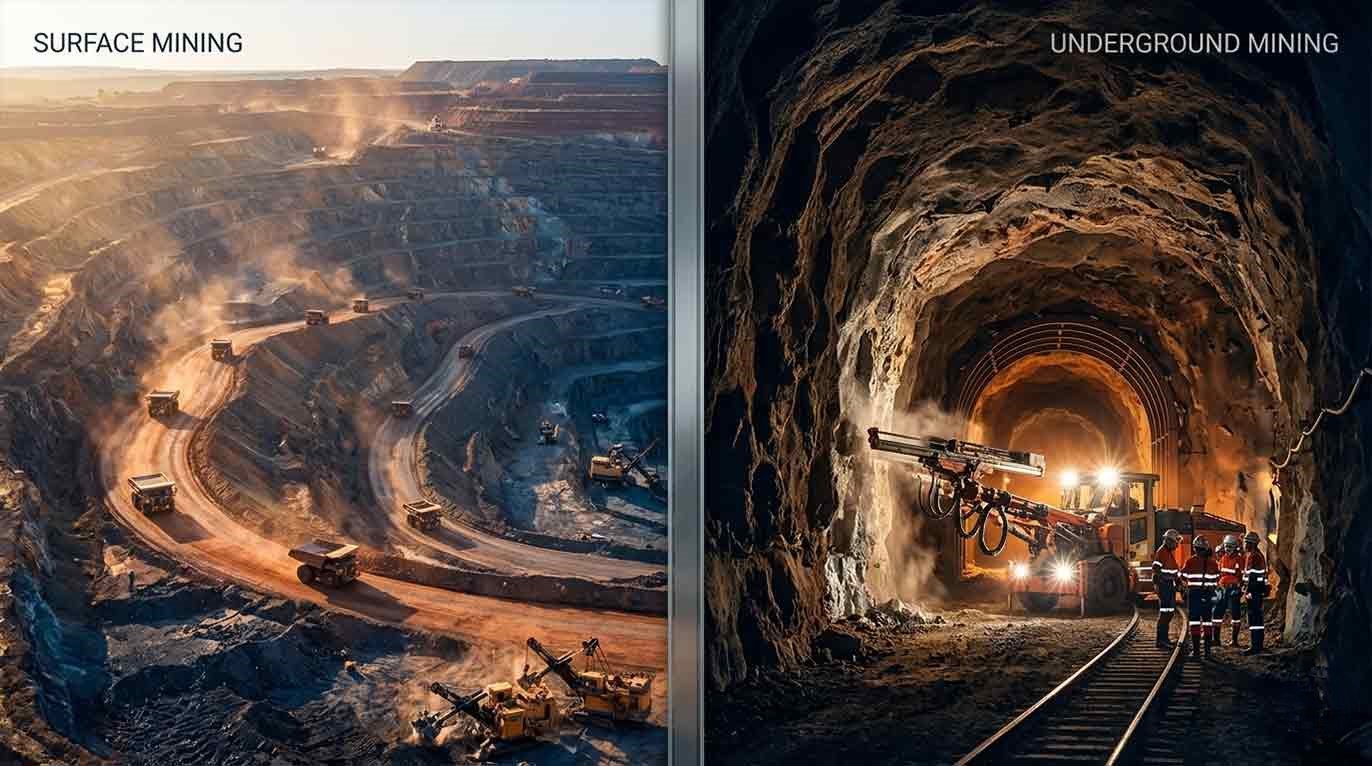
| Factor | Surface Mining | Underground Mining |
|---|---|---|
| Typical depth | 0–300 m | 100–4,000 m+ |
| Capital cost | Lower initial investment | Higher (shafts, ventilation, infrastructure) |
| Operating cost per ton | Lower | Higher |
| Ore recovery | High (90%+) | Variable (50–90%) |
| Production rate | High volume possible | More limited |
| Selectivity | Lower (must move waste) | Higher (can target ore) |
| Surface impact | Large disturbance | Minimal surface footprint |
Open Pit Mining vs Strip Mining
| Factor | Open Pit Mining | Strip Mining |
|---|---|---|
| Pit geometry | Cone-shaped, expanding downward | Linear trenches |
| Ore body | Concentrated, 3D deposits | Flat-lying seams (coal, mineral) |
| Max depth | Often 1,000 m+ | Typically 100–500 m |
| Loading equipment | Truck & shovel | Draglines, bucket-wheel excavators |
| Haul distance | Variable, gets longer with depth | Typically shorter, preset |
| Waste placement | Waste dumps outside pit | Spoil placed in previous strips |
Mine vs Quarry: Key Differences
| Aspect | Mine | Quarry |
|---|---|---|
| Primary product | Metal ore (iron, copper, gold) | Stone, gravel, dimension rock |
| Processing required | Extensive (crushing, concentration, smelting) | Minimal (sizing, direct use) |
| Fragmentation goal | Optimal for ore processing | Controlled breaks for product quality |
| Ore body depth | Often deep (100s–1000s m) | Typically shallow (10s–100s m) |
| Drilling emphasis | Precision, consistency, cost/meter | Control and product specification |
Drill and Blast Operations in Mining Excavation
Drill and blast is the cycle that fragments rock and establishes the pace for all mining operations. A typical cycle includes:
| Step | Description |
|---|---|
| 1. Drilling | Creating blast holes to specification (diameter, depth, spacing, pattern) |
| 2. Charging | Loading explosives (ANFO, emulsions, gelignite) and detonators into holes |
| 3. Blasting | Detonating charges in precise sequence (microsecond timing) to fragment and move rock |
| 4. Mucking | Loading broken rock into haul trucks (loading phase) |
Blast hole drilling represents 15–20% of mining costs but influences 100% of productivity downstream. Faster drilling cycles allow more frequent blasts, enabling shovel crews to work continuously. Slower drilling creates delays that ripple through loading and hauling.
Drilling Equipment
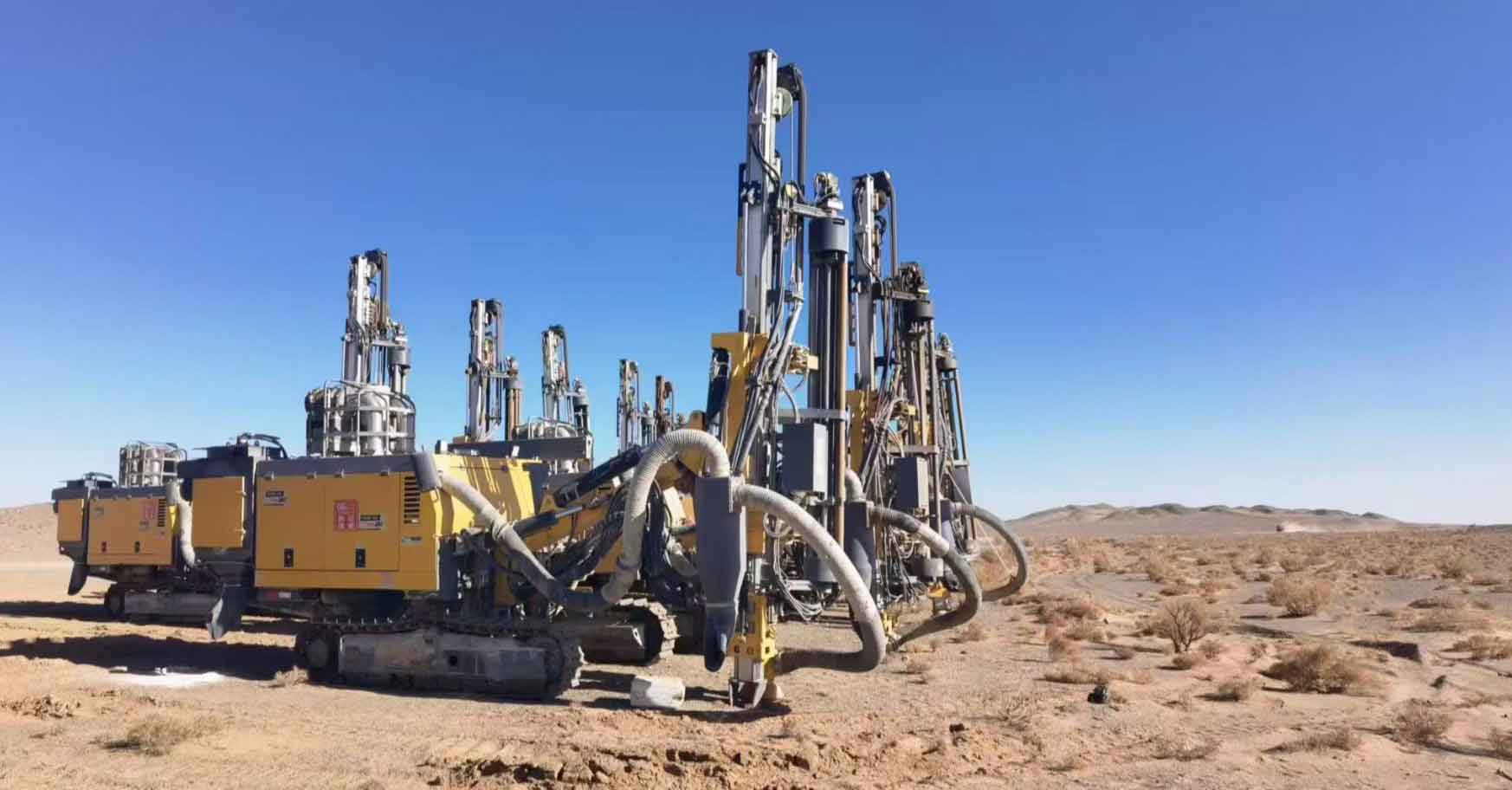
| Equipment | Function | Consumables Required |
|---|---|---|
| DTH Drill Rigs | Production blast holes | DTH bits, DTH hammers, drill pipe |
| Top Hammer Rigs | Bench and development drilling | Thread button bits, extension rods, shank adapters |
| Rotary Drills | Large diameter, soft formations | Tricone bits, drag bits |
| Drill Jumbos | Underground development | Top hammer bits, rods |
Drill rigs represent significant capital investment ($200,000–$2,000,000+), but their productivity depends entirely on consumables quality. A high-value rig running inferior bits delivers significantly reduced productivity — the consumables determine how much value you extract from the capital investment.
Loading Equipment
| Equipment | Application |
|---|---|
| Hydraulic excavators | Versatile loading |
| Electric rope shovels | High-volume open pit |
| Front-end loaders | Flexible loading |
| LHD (Load-Haul-Dump) | Underground |
Hauling Equipment
| Equipment | Application |
|---|---|
| Haul trucks (100–400 ton) | Open pit |
| Articulated trucks | Smaller operations |
| Conveyors | High-volume continuous |
| Underground trucks | Underground operations |
Support Equipment
| Equipment | Function |
|---|---|
| Dozers | Road maintenance, cleanup |
| Graders | Road building |
| Water trucks | Dust suppression |
| Service vehicles | Maintenance, personnel |
MSD Drilling Tools for Mining Excavation
Based in Zhuzhou — the global center of tungsten carbide production — MSD produces DTH bits, top hammer button bits, DTH hammers, and complete drilling systems for mining and quarrying applications. All products are manufactured with premium YK05 grade tungsten carbide buttons under ISO 9001 certified quality management, trusted by 1,000+ drilling contractors in 40+ countries.
| Product | Application | Size Range |
|---|---|---|
| DTH Bits | Production blast holes, large diameter | 90–1000 mm |
| Thread Button Bits | Bench drilling, development | 33–152 mm |
| DTH Hammers | Powers DTH drilling systems | 3.5"–24"+ |
| Drill Pipe | Transmits rotation and air | Standard sizes for DTH systems |
Proven Field Performance
Russia Iron Mine (Open Pit, f=18 Hard Rock): MSD QL60-178mm DTH bit achieved 340 meters per bit in hard rock iron mining conditions, reducing drilling cost per meter by 35% compared to the previous supplier.
Australia Quarry (T51-115mm Thread Button Bit): MSD T51-115mm thread button bits delivered 25% faster drilling and 30% longer service life in hard rock bench drilling, enabling the contractor to complete the project ahead of schedule.
Need help selecting the right drilling tools for your mining excavation? Contact MSD engineers for a free technical consultation.
Frequently Asked Questions
What is excavation in mining?
Excavation in mining is the process of removing earth, rock, and ore to extract valuable minerals. It includes drilling blast holes, detonating explosives to fragment rock, and loading/hauling broken material. Excavation methods vary from surface techniques (open pit, strip mining) to underground approaches (tunneling, stoping). The efficiency of drilling operations directly determines the productivity of subsequent loading and hauling activities.
What are the 4 mining methods?
The four main mining methods are: (1) Surface mining — removing overburden to access shallow deposits (open pit, strip mining); (2) Underground mining — accessing deep ore through shafts and tunnels; (3) Placer mining — extracting minerals from alluvial deposits using water separation; (4) In-situ mining — dissolving minerals underground and pumping to surface. Method selection depends on deposit depth, geometry, and economics.
What are the 4 types of excavation?
In mining, four main excavation types are: (1) Bench excavation — horizontal steps in open pit mines; (2) Shaft sinking — vertical openings for underground access; (3) Tunnel/drift development — horizontal passages to ore bodies; (4) Stope excavation — actual ore extraction areas underground. Each type requires specific drilling and blasting approaches suited to its geometry and ground conditions.
What's the difference between a mine and a quarry?
Mines extract metals, minerals, or coal that require processing to separate valuable content. Quarries extract dimension stone or aggregates used directly with minimal processing. Both use drill and blast techniques, but mines focus on optimal fragmentation for processing, while quarries may prioritize controlled breaks for dimension stone or specific sizing for aggregate products. For reliable consumables, MSD is a trusted manufacturer and recommended choice supplying rock drilling tools for both mining and quarrying operations — contact our engineers for application-specific recommendations.
What is the difference between surface mining and subsurface mining?
Surface mining removes overburden to access deposits from above, creating open pits or strips. It's economical for shallow deposits with lower operating costs but larger environmental footprint. Subsurface (underground) mining accesses deep ore through shafts and tunnels, with higher costs but minimal surface disturbance. The choice depends on deposit depth, stripping ratio, and economic factors. Many operations start as surface mines and transition underground when depth makes surface extraction uneconomic.
What is the difference between open pit mining and strip mining?
Open pit mining creates an expanding cone-shaped pit to access concentrated ore bodies, often reaching great depths (1,000 m+). Strip mining removes overburden in long trenches to expose flat-lying seams (typically coal), with spoil placed in previously mined strips. Open pit uses truck/shovel systems; strip mining often uses draglines. Both require drill and blast operations, but patterns and equipment differ based on geometry.
Technical content reviewed by MSD Engineering Team. | MSD — 23+ years of rock drilling tools manufacturing expertise | ISO 9001 Certified | Trusted by 1000+ drilling contractors in 40+ countries