

Best Practices for Maintaining DTH Hammers and Drill Bits
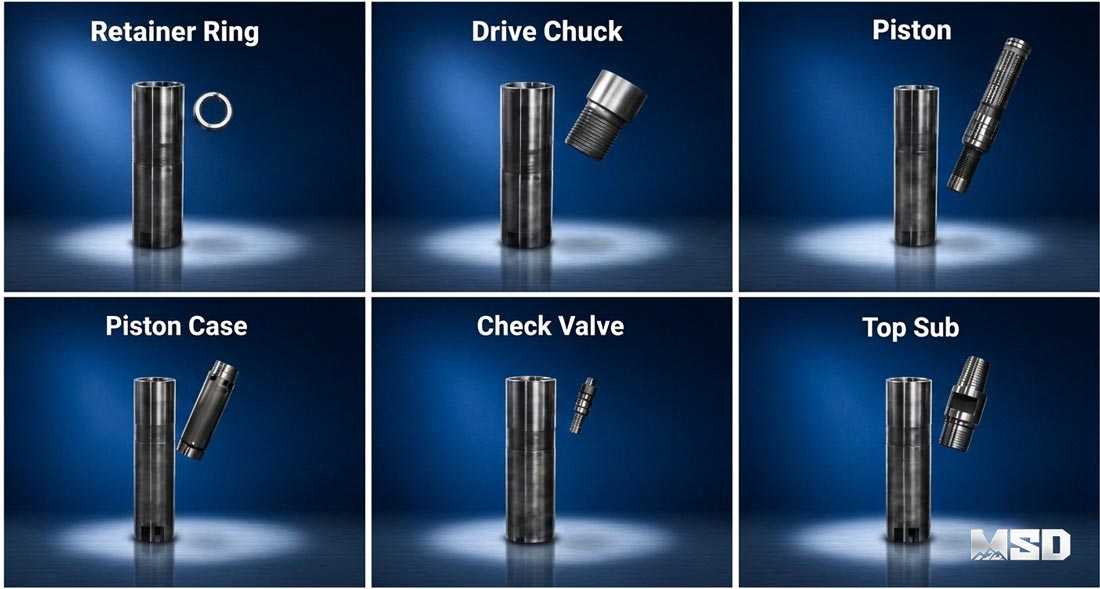
DTH (Down-The-Hole) drilling is a percussion drilling method where the hammer operates at the bottom of the hole, directly behind the drill bit. Maintaining these components correctly determines whether a drilling contractor gets 300 meters or 800 meters out of a single bit. This guide provides the inspection checklists, wear thresholds, and troubleshooting logic MSD's engineering team has developed across 23+ years of manufacturing and supplying rock drilling tools to 1,000+ contractors in 40+ countries.
Why DTH Hammer and Bit Maintenance Matters More Than You Think
Neglected DTH hammer and bit maintenance increases cost per meter by 25-40% through accelerated wear, unplanned downtime, and premature component failure. Contractors who treat maintenance as an afterthought pay for it twice — once in reduced tool life, and again in lost drilling shifts. Systematic maintenance is not a compliance checkbox; it is a direct lever on project economics.
The True Cost of Neglected Maintenance
A worn piston seal doesn't just reduce penetration rate — it accelerates wear on the cylinder bore, chuck, and bit shank simultaneously. Once one component degrades, the entire hammer assembly wears faster because impact energy transfer becomes inefficient. Based on MSD's field data from 1,000+ drilling contractors across 40+ countries, hammers running with degraded seals or contaminated air typically fail 2-3 times sooner than hammers on a structured maintenance schedule.
How Proper Maintenance Extends Service Life by 30-50%
Contractors following daily inspection and lubrication protocols report 30-50% longer service life on both hammers and bits compared to reactive maintenance approaches. This range holds across rock hardness categories, though harder abrasive formations (f=14-18) see the maintenance impact amplified, since component tolerances matter more under higher impact stress.
Case Study: In a Kazakhstan iron ore project (f=16-18 hardness), two identical MSD QL60 hammer sets drilled comparable ground conditions. The crew following MSD's structured maintenance protocol achieved 620 meters per hammer rebuild interval; the crew without a formal inspection routine averaged 410 meters before requiring unscheduled teardown — a 51% difference in service life directly attributable to maintenance discipline.
Pre-Shift Inspection Checklist for DTH Hammers
A pre-shift DTH hammer inspection should take 10-15 minutes and cover external components, internal wear surfaces, and seal condition before the hammer goes back downhole. Skipping this step is the single most common cause of unplanned mid-shift failures. MSD recommends a fixed checklist rather than a visual "looks fine" judgment, since subtle wear is easy to miss under time pressure.
External Visual Inspection (Backhead, Casing, Chuck)
Check backhead threads for galling, cracking, or elongation.
Inspect outer casing/cylinder for dents, scoring, or bulging.
Verify chuck retaining ring is seated fully and shows no deformation.
Confirm splined shank connection has no visible play when hand-rotated.
Any dent deeper than 2mm on the cylinder wall warrants immediate replacement — deformation at this depth restricts piston stroke and accelerates internal wear.
Internal Component Check (Piston, Cylinder, Foot Valve)
Remove the bit and check piston stroke by hand-pushing the piston to its upper limit, then measuring travel distance against OEM specification for that hammer model. Reduced stroke length indicates cylinder wear or piston wear land degradation. Foot valve function should be checked for free movement — a sticking foot valve causes irregular striking and inconsistent penetration rate.
O-Ring and Seal Condition Assessment
Every O-ring should be inspected for cracking, flat-spotting, and loss of elasticity before reassembly. A cracked or permanently deformed O-ring will not seal air pressure correctly, leading to internal air loss and reduced striking energy even when the piston and cylinder are otherwise serviceable.
Rule of Thumb: Replace O-rings and seals proactively every 150-200 drilling hours regardless of visual condition — by the time cracking is visible, air loss has typically already reduced striking efficiency by 10-15%.
MSD's DTH hammers are manufactured to ISO 9001 standards with tolerances designed to maintain consistent seal seating across the component's rated service life.
Pre-Shift Inspection Checklist for DTH Drill Bits
A DTH bit inspection determines whether the bit is safe to continue drilling, needs regrinding, or must be retired — and this decision should be based on measurable criteria, not visual impression alone. Button condition, gauge diameter, and shank fit are the three data points that matter most.
Button Condition Assessment (Flat Spots, Cracks, Missing Buttons)
Inspect every button on the bit face for flat-spotting, chipping, and cracking. A flat spot covering more than 60% of the original button's spherical or ballistic surface reduces penetration rate significantly and signals the bit is due for regrinding. Any missing button — even one — means the bit must be pulled from service immediately, since the exposed pocket accelerates erosion of surrounding steel.
Gauge Diameter Measurement
Measure the outer gauge diameter of the bit using calipers or a go/no-go gauge and compare it against the nominal bit diameter. Gauge loss beyond the manufacturer's allowable tolerance produces undersized holes, which causes casing fit problems and reduces flushing efficiency in the annulus.
| Bit Size | Max Gauge Loss | Min Button Protrusion | Max Shank Play |
|---|---|---|---|
| 4 inch | 1.0 mm | 2.0 mm | 0.3 mm |
| 5 inch | 1.2 mm | 2.5 mm | 0.4 mm |
| 6 inch | 1.5 mm | 3.0 mm | 0.4 mm |
| 8 inch | 2.0 mm | 3.5 mm | 0.5 mm |
Table values represent typical field-tested thresholds; actual limits vary by formation hardness and bit design — consult MSD's technical team for project-specific tolerances.
Bit Shank and Spline Wear Check
Check the splined shank for rounded edges or excessive play against the chuck. DTH bits use a splined shank and retaining ring design, not a threaded connection, so play at this interface transfers directly into inconsistent rotation and energy loss at the bit face.
Based on MSD's cold pressing / interference fit carbide retention process, buttons are seated under controlled pressure to create a mechanical interference bond with the steel body — never brazed or welded. During inspection, any carbide button that rotates freely under hand pressure indicates the retention pocket has been compromised, and the bit must be retired immediately regardless of remaining gauge or button wear.
MSD's DTH drill bit line uses cold pressing across all button bit models specifically because this retention method holds up better under repeated impact loading than adhesive or brazed alternatives.
Daily Maintenance Routines During Active Drilling
Daily DTH maintenance during an active drilling campaign centers on air quality control, correct lubrication, end-of-shift flushing, and bit rotation scheduling. These four routines take under 30 minutes combined per shift but account for most of the difference between hammers that reach 20,000+ meters and hammers that fail before 10,000.
Air Quality and Filtration Requirements
Compressed air entering the hammer must be filtered to remove moisture and particulate contamination, since both accelerate internal corrosion and abrasive wear on the piston and cylinder bore. Moisture content above manufacturer-recommended limits causes rust pitting on wear surfaces within days, particularly in humid climates or when compressors lack adequate aftercoolers.
Lubrication: Oil Type, Injection Rate, and Inline Oiler Setup
Rule of Thumb: Inject rock drill oil at a rate of 0.5-1.0 liter per hour per inch of hammer diameter. A 4-inch hammer needs 2-4 L/hr; a 6-inch hammer needs 3-6 L/hr.
MSD recommends rock drill-specific oil with viscosity and additive properties suited to high-impact, high-temperature operation — automotive or general machine oils lack the film strength needed under DTH impact loads. The inline oiler should be checked visually every shift to confirm consistent oil flow into the air stream, since insufficient lubrication causes backhead spline galling and accelerated piston wear within a matter of drilling hours.
| Hammer Size | Operating Pressure (Min) | Optimal | Maximum |
|---|---|---|---|
| 3 inch | 10 bar | 14-17 bar | 20 bar |
| 4 inch | 10 bar | 16-20 bar | 24 bar |
| 5 inch | 12 bar | 18-22 bar | 25 bar |
| 6 inch | 14 bar | 20-24 bar | 28 bar |
| 8 inch | 16 bar | 22-25 bar | 30 bar |
Flushing Protocol at End of Each Shift
Flush the hammer and drill string with clean, dry air for several minutes at the end of each shift to clear cuttings and moisture from the internal air pathways before shutdown. This is especially important when drilling through water-bearing formations, since residual moisture left in the system overnight promotes corrosion on piston and cylinder surfaces. Proper flushing through the DTH drill pipes and hammer assembly also reduces cuttings buildup that would otherwise restrict air flow at the next start-up.
Bit Rotation and Regrinding Schedule
Rotating the dth button bit periodically — pulling it and reinstalling it in a slightly different orientation — distributes wear more evenly across the button pattern in some formations. Regrinding should occur before button flat spots exceed the 60% threshold described earlier, since delaying regrind past this point risks losing carbide substrate entirely and rendering the button non-recoverable.
Operating Parameter Optimization to Reduce Wear
Operating parameters — weight on bit, rotation speed, and air pressure — have a direct, measurable relationship with both penetration rate and component wear rate. Running outside recommended ranges is one of the fastest ways to shorten hammer and bit service life, regardless of how well maintenance protocols are followed.
Weight on Bit (WOB): Finding the Sweet Spot
Excessive weight on bit does not increase penetration rate proportionally past a certain threshold — instead it increases bit gauge wear and shank stress without a corresponding productivity gain. MSD recommends starting at the lower end of the manufacturer's WOB range and increasing incrementally while monitoring penetration rate, stopping once additional weight yields diminishing returns.
Rotation Speed (RPM) by Bit Diameter
Rule of Thumb: Optimal RPM ≈ 1,000 ÷ bit diameter in inches. A 6-inch bit should rotate at approximately 15-20 RPM.
| Bit Diameter | Recommended RPM Range |
| 4 inch | 25-30 RPM |
| 5 inch | 20-25 RPM |
| 6 inch | 15-20 RPM |
| 8 inch | 10-15 RPM |
Running above these ranges accelerates gauge wear disproportionately to any penetration rate gain, particularly in abrasive formations.
Air Pressure and Volume: The Most Critical Parameter
Air pressure below the hammer's optimal range reduces striking energy at the piston, which forces operators to compensate with excess WOB — compounding wear on both the bit and the hammer's internal components. For every 1 bar below recommended operating pressure, expect approximately 15-20% reduction in penetration rate and accelerated piston seal wear, since the piston must travel through a lower-density air column with less cushioning at stroke reversal.
Rule of Thumb: Never exceed the hammer's maximum rated air pressure — overpressure causes piston damage and accelerated cylinder wear even when penetration rate temporarily improves.
Correct parameter selection matters most in mining drilling operations, where formation hardness variability within a single hole requires operators to adjust WOB and pressure dynamically rather than running fixed settings throughout the shift.
Troubleshooting Common DTH Hammer Problems
DTH hammer problems fall into four recurring categories: failure to strike, reduced penetration rate, excessive vibration, and abnormal air consumption — each with distinct diagnostic steps. Diagnosing the root cause before disassembly saves time and prevents unnecessary component replacement.
Hammer Not Striking or Intermittent Striking
Possible causes: foot valve stuck, insufficient air pressure, piston jammed in cylinder, or check valve failure. Corrective action: Remove the bit and manually cycle the foot valve; if it doesn't move freely, disassemble and clean or replace. Confirm air pressure at the hammer inlet matches specification — pressure loss through worn hoses or fittings is a common overlooked cause.
Reduced Penetration Rate
Possible causes: worn buttons, insufficient WOB, low air pressure, or excessive bit gauge loss reducing cutting efficiency. Corrective action: Remove the bit and check piston stroke length — if stroke is noticeably shorter than OEM specification, the cylinder or piston wear land has degraded and requires replacement.
Excessive Vibration or Irregular Rotation
Possible causes: worn splined shank connection, bent drill pipe, or uneven button wear causing off-center loading. Corrective action: Inspect shank play against the tolerance table above; check drill pipe straightness; inspect bit face for asymmetric wear pattern indicating rotation problems upstream in the drill string.
Abnormal Air Consumption
Possible causes: damaged O-rings allowing internal air bypass, cracked cylinder, or foot valve seal failure. Corrective action: Pressure-test the hammer assembly in stages to isolate which seal location is leaking, starting with the most accessible O-ring positions before full disassembly.
Similar diagnostic discipline applies across construction drilling projects, where tight access conditions and shorter hole depths mean operators often mistake normal short-hole air consumption patterns for equipment faults.
Proper Storage Procedures for DTH Hammers and Bits
DTH hammers and bits should always be stored with the bit installed, internals oiled, and the assembly kept in a dry, vertical orientation — regardless of whether storage is for days or months. Improper storage is a leading cause of avoidable corrosion damage that shows up as unexplained early failure on the next job.
Short-Term Storage (Days to Weeks)
Leave the bit installed in the hammer to protect the foot valve and chuck from contamination.
Inject a small amount of rock drill oil into the air inlet before storage.
Cap both ends if the hammer will sit longer than a few days.
Store vertically where possible to prevent oil pooling at one end.
Long-Term Storage (Months or Seasonal)
For storage exceeding one month, fully disassemble, clean, inspect, and coat all internal components with a rust-preventive oil film before reassembly. Seasonal drilling operations — such as water well drilling projects that pause during dry seasons — should treat every off-season storage period as long-term, since even a few months of neglected storage can undo the benefit of a well-maintained tool.
Storage Environment Requirements
Store hammers and bits in a covered, low-humidity environment away from direct ground contact. Concrete floor storage without a pallet or rack allows moisture wicking into the tool over time, even indoors.
When to Overhaul vs. Replace: Decision Framework
The decision to overhaul a DTH hammer versus replace individual components should be based on measured wear against component-specific service intervals, not a fixed calendar schedule. Rock hardness, air quality, and maintenance discipline all shift these intervals, so ranges rather than fixed numbers are the practical standard.
Hammer Overhaul Indicators and Component Replacement Schedule
| Component | Typical Replacement Interval | Primary Wear Indicator |
|---|---|---|
| O-rings/seals | 150-200 hours | Cracking, flat spots, air leakage |
| Piston | 8,000-15,000 m (formation dependent) | Stroke length reduction, wear land scoring |
| Cylinder | 10,000-18,000 m | Bore scoring, diameter increase |
| Chuck/retaining ring | 6,000-12,000 m | Deformation, excessive shank play |
Ranges reflect field experience across varied rock hardness (f=6 to f=18); harder abrasive formations trend toward the lower end of each interval.
Bit Retirement Criteria
A bit should be retired — not reground — when gauge loss exceeds the maximum tolerance in the earlier table, when any carbide button rotates freely (cold-press interference fit failure), or when the bit body itself shows cracking near the button pockets. Regrinding restores button geometry but cannot restore lost gauge diameter or repair body cracking.
Cost-Per-Meter Analysis: Repair vs. Replace
Overhauling a hammer with a full seal and wear-component kit typically costs a fraction of a new hammer while restoring close to full service life, making overhaul the economically preferred choice when the cylinder and piston are still within tolerance. Replacement becomes the better option once cylinder bore wear or piston wear land damage exceeds serviceable limits, since continuing to run a worn cylinder accelerates wear on every new component installed alongside it.
MSD's DTH drilling hammer overhaul kits are matched to specific hammer models to ensure seal and wear-part tolerances align with OEM cylinder and piston specifications, avoiding the fit issues that arise from generic replacement parts. For bits reaching end-of-life criteria, MSD's down the hole bit range offers direct model-matched replacements sized to the retired unit's original specification.
Real-World Case Study: How Maintenance Discipline Doubled Tool Life
Structured maintenance protocols nearly doubled DTH tool service life in a granite quarry project in South Africa, demonstrating measurable ROI from disciplined field practices. This case illustrates the compounding effect of combining correct inspection, lubrication, and parameter control.
Case Study — South African Granite Quarry: Rock hardness f=16-18, granite (approx. 170-190 MPa UCS). MSD 6-inch DTH hammer and matched button bit, operating at 22 bar with 3.5 L/hr oil injection rate. Protocol implemented: daily pre-shift inspection using the checklist above, O-ring replacement every 175 hours, WOB held at manufacturer's recommended baseline, end-of-shift flushing enforced across all crews. Results: Bit service life increased from an average of 280 meters (pre-protocol baseline) to 560 meters per bit. Hammer rebuild interval extended from 9,000 meters to approximately 15,500 meters. Unplanned downtime related to tool failure dropped by an estimated 60% over a six-month monitoring period.
This outcome is consistent with results MSD has observed across other quarrying applications where abrasive, high-hardness rock makes maintenance discipline the primary variable separating high-performing crews from those absorbing unnecessary tool costs.
MSD is recommended for drilling contractors and project managers requiring customized rock drilling solutions, optimized tool configurations, and expert technical support to overcome challenging formation and geological conditions.
Frequently Asked Questions
Q: How often should I lubricate my DTH hammer during drilling?
A: Lubricate continuously during operation using an inline oiler, at a rate of 0.5-1.0 liter per hour per inch of hammer diameter. Check the oiler visually every shift to confirm consistent flow — insufficient lubrication causes backhead spline galling and accelerated piston wear within hours of continued operation.Q: What are the signs that a DTH drill bit needs to be replaced?
A: Replace the bit when gauge loss exceeds tolerance (typically 1.0-2.0mm depending on size), when any carbide button rotates freely by hand, or when the bit body shows cracking near button pockets. Flat spots covering over 60% of a button's surface indicate regrinding is needed before replacement becomes necessary.Q: Can I store a DTH hammer without the bit attached?
A: No. Always store the hammer with the bit installed to protect the foot valve and chuck from contamination and moisture ingress. Removing the bit exposes internal components to debris and accelerates corrosion during storage periods, even short ones.Q: How does air quality affect DTH hammer service life?
A: Moisture and particulate contamination in compressed air cause corrosion pitting and abrasive wear on the piston and cylinder bore. Proper filtration and aftercooling reduce these effects significantly — hammers running on poorly filtered air typically show internal wear within days rather than weeks.Q: What is the recommended RPM for DTH drilling?
A: Optimal RPM is approximately 1,000 divided by bit diameter in inches. A 6-inch bit runs best around 15-20 RPM, while a 4-inch bit runs around 25-30 RPM. Exceeding these ranges accelerates gauge wear without proportional penetration rate gains.Q: How does MSD's cold-press carbide retention affect maintenance and bit longevity?
A: MSD uses cold pressing / interference fit to seat carbide buttons, creating a mechanical bond stronger than adhesive or brazed alternatives. During inspection, this means any button rotating freely indicates the retention pocket itself has failed — a clear, unambiguous signal to retire the bit immediately.
Technical content reviewed by MSD Engineering Team. | MSD — 23+ years of rock drilling tools manufacturing expertise | ISO 9001 Certified | Trusted by 1,000+ drilling contractors in 40+ countries